
Calling every carton “the pack” fails as soon as a defect has to be traced. The cost is a complaint about a shipper when the dose container was the part that mattered, or the reverse.
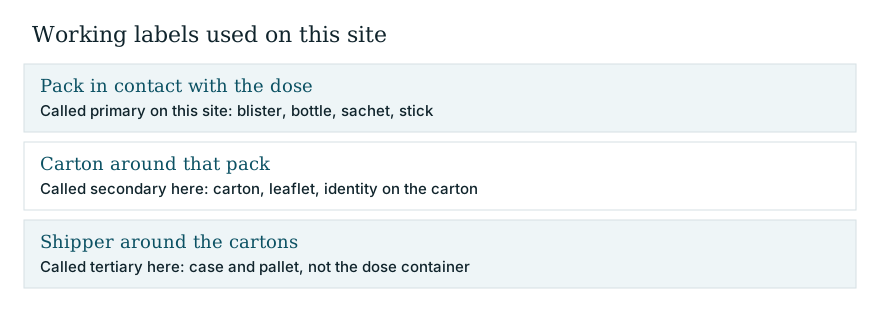
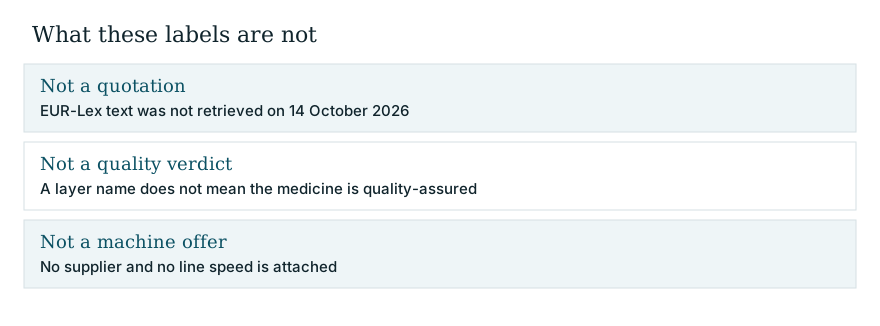
On this site, primary means the pack in contact with the dose, secondary means the carton and leaflet around that pack, and tertiary means the shipper around those cartons. These are working labels for the guides that follow. They are not a quotation from a statute.
Why the legal sentence is not filled in here
A market’s law defines immediate packaging, outer packaging and safety features in its own text, with a date and a status. On 14 October 2026 an attempt to read the consolidated EU directive text from EUR-Lex returned an incomplete response, so this page does not pretend to quote it. Readers who need the legal definition should open the text in force for their market and record the article number and date. The WHO medicines page used elsewhere on this site talks about quality-assured products. It does not define these three layers.
How the labels are used later
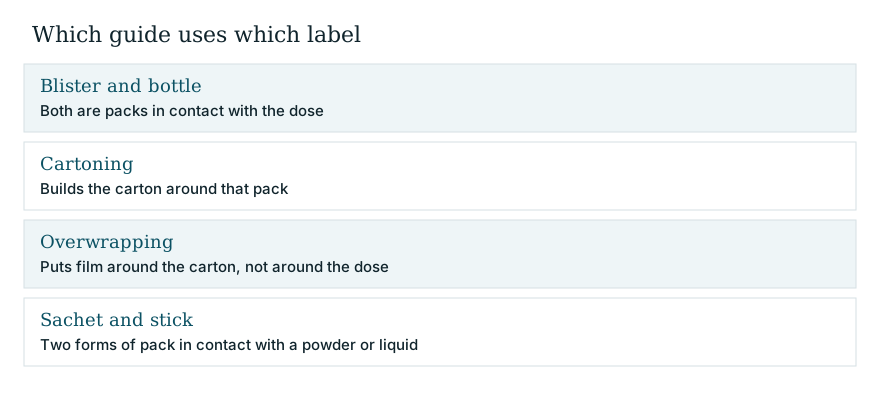
A blister and a bottle are both treated as packs in contact with the dose on Blister and bottle packaging. Cartoning, on Pharmaceutical cartoning, is about the carton around that pack. Film around the carton is overwrapping, and it is not relabelled as the dose container. A sachet and a stick pack are compared as two contact packs on Sachet and stick pack.
The packaging section is the parent of these pages. The glossary repeats the same three labels and points back here.
How this page was put together
The three labels are editorial names so later pages stay consistent. No regulatory quotation was added after the EUR-Lex retrieval failed. No material barrier number was added.