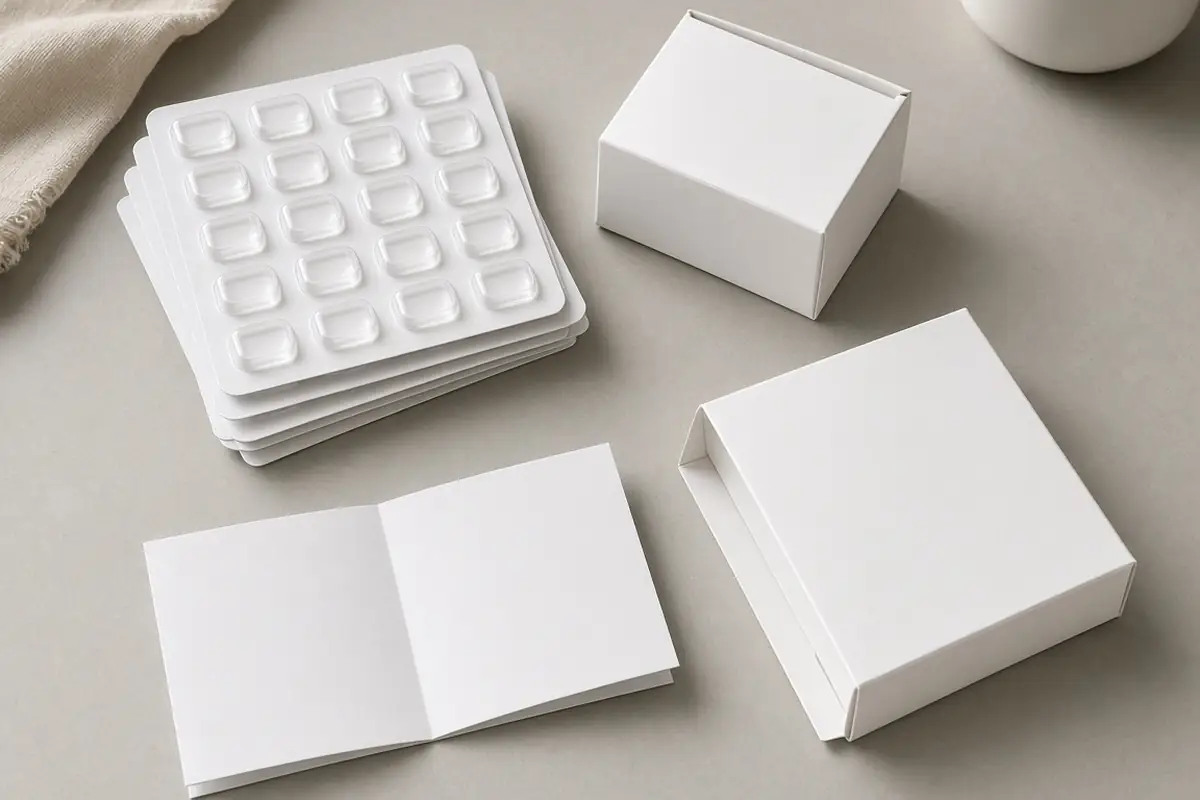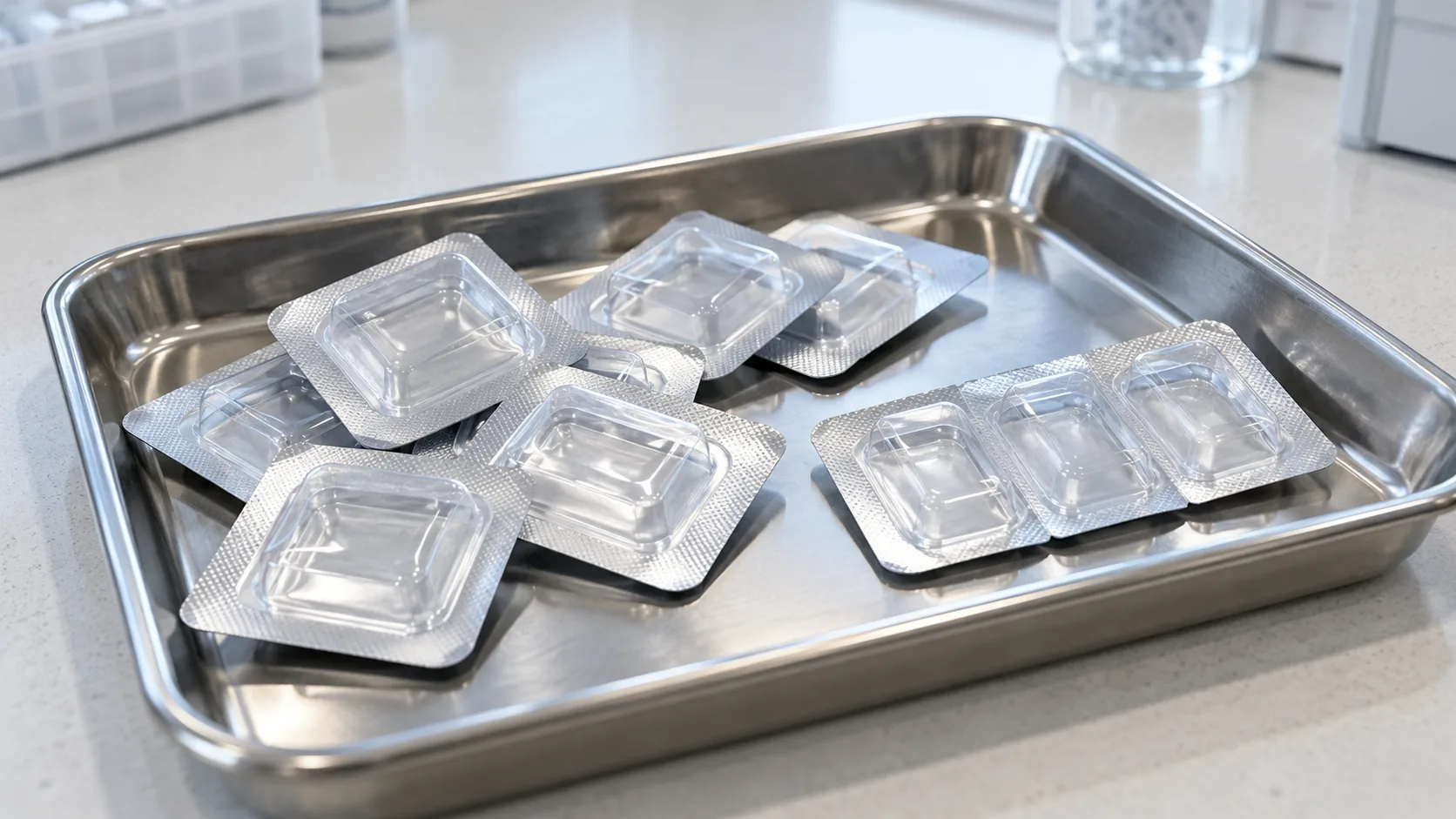
A cell torn off a blister card takes only the print that is on that cell. A lot number or barcode left on the card header stays with the header, so the separated cell fails the scan.
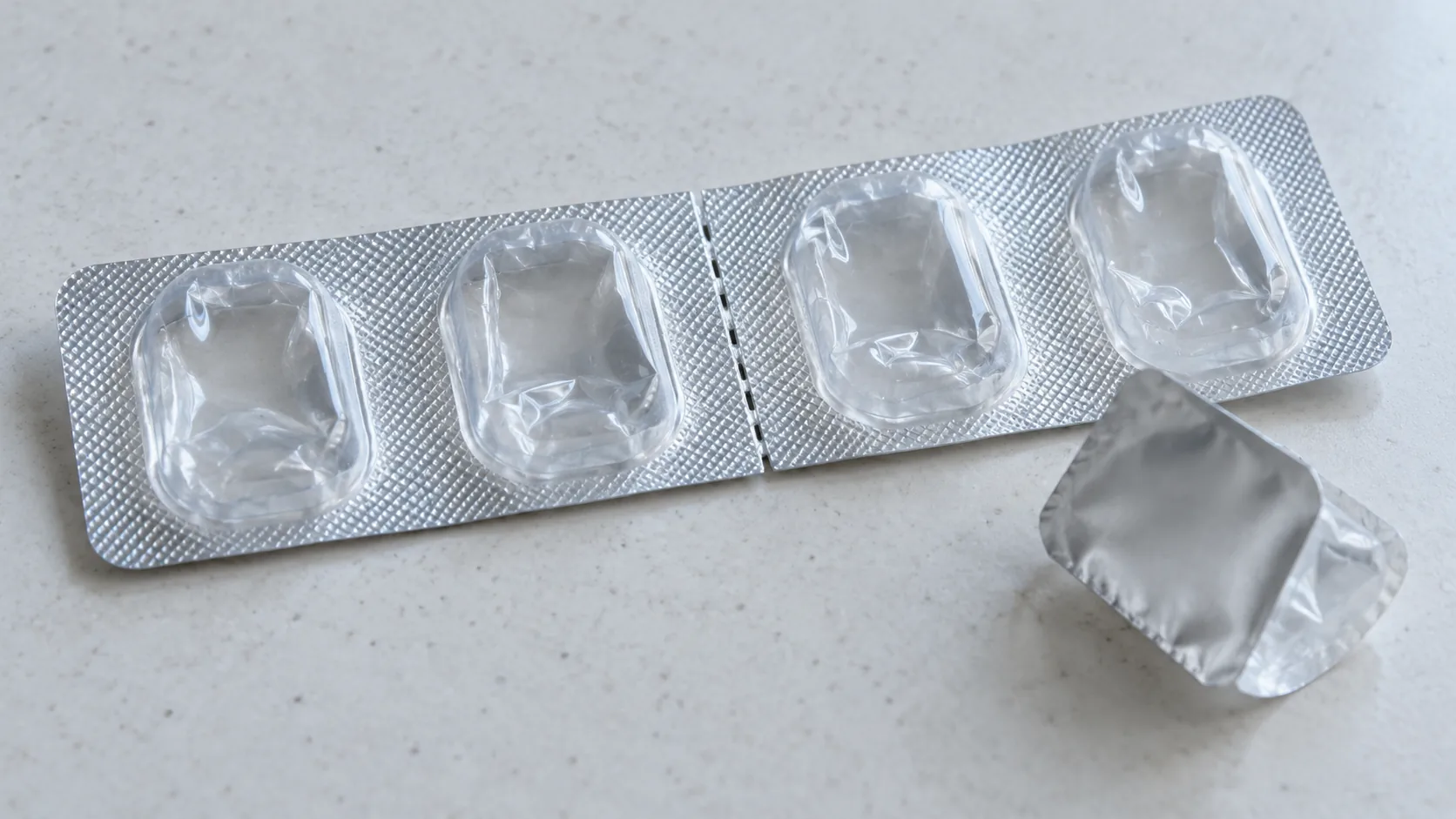
For a drug product covered by 21 CFR 201.25, the label carries a linear barcode that contains at least the National Drug Code (NDC), has enough blank space to scan, and stays intact under normal conditions of use. FDA’s August 2011 barcode questions-and-answers guidance adds the placement rule for perforations: when cells can be separated, and each cell has a label, the barcode goes on each cell and is kept off the perforation.
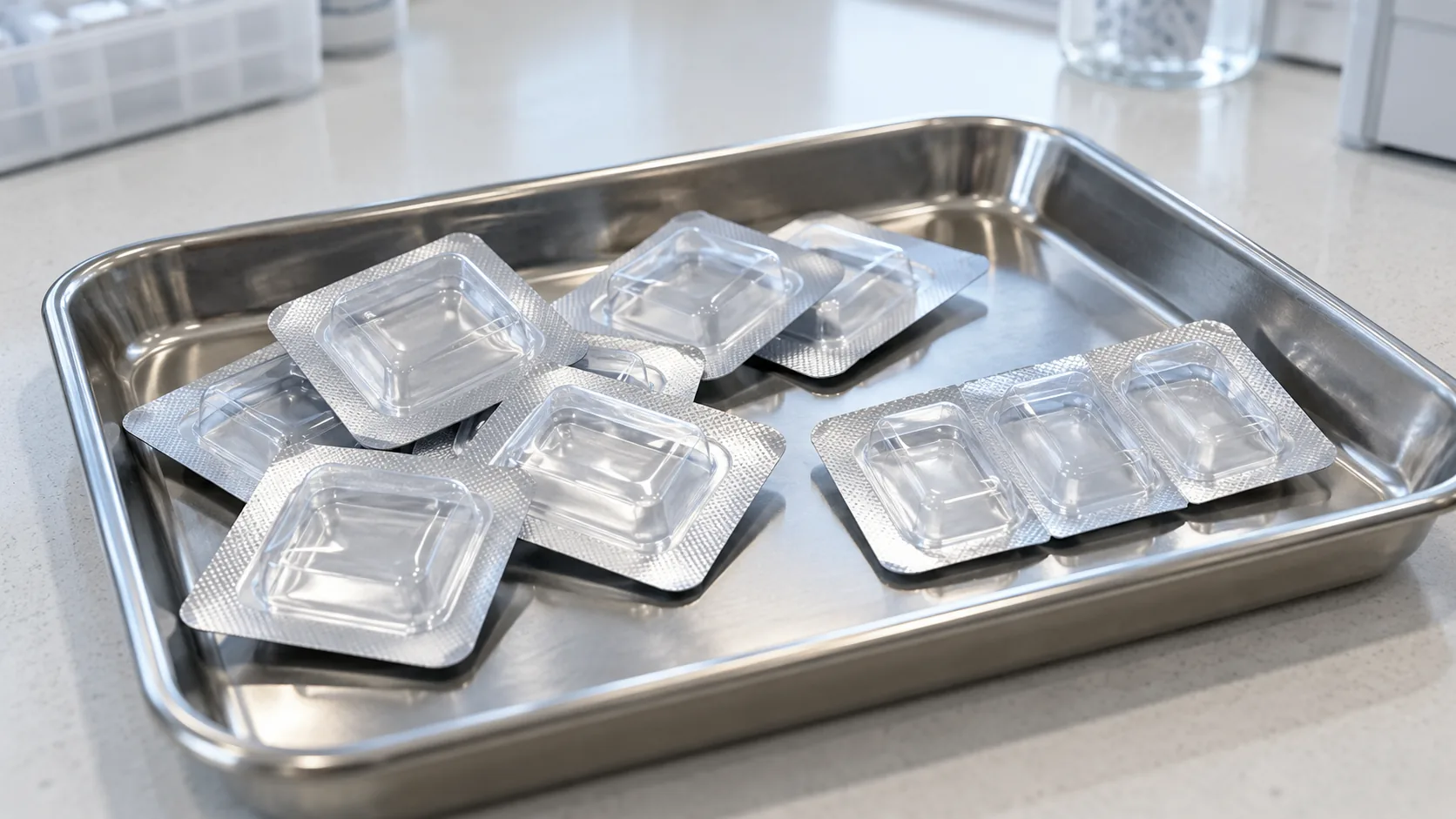
Quick specs from the texts read for this page
Read each figure with the document and the condition listed beside it.
| Item | Figure in the source | What it decides |
|---|---|---|
| Unit-dose distribution | ASHP statement approved in 1989: single-unit packages, dispensed as ready to administer as possible, and for most medications not more than a 24-hour supply at the patient-care area. The footnote allows a larger supply in long-term care, with 48 or 72 hours given as examples. | How much labeled drug is staged at the bedside |
| Linear barcode in force on 20 October 2026 | 21 CFR 201.25(c), as read on the Cornell LII mirror of the eCFR: at least the NDC, in a linear barcode meeting EAN/UCC or HIBCC standards or another format approved by the relevant FDA Center Director; enough blank space to scan; intact under normal use | What a bedside scanner has to read today |
| Perforated blister cells | August 2011 FDA guidance, Q15, citing the 2004 rule preamble at 69 FR 9120 at 9140 | The symbol belongs on each labeled cell and off the tear line |
| Later barcode formats | Final rule published 5 March 2026 at 91 FR 10749, effective 7 March 2033 | Linear or nonlinear barcodes become available on the effective date, after FDA recognizes the format |
| Commercial solid-oral repack date | July 2020 FDA guidance: the shorter of 6 months from repackaging and 25 percent of the time remaining until the original manufacturer’s expiration, when five conditions hold | The enforcement-discretion ceiling for registered commercial repackagers of solid oral products |
| DataMatrix size extract | GS1 DataMatrix Guideline annex A.1.1, reprinting General Specifications version 16, table 6: X-dimension minimum 0.254 mm, target 0.380 mm, maximum 0.495 mm; quiet zone 1X on all four sides; grade string 1.5/08/660 | A published size range, with the guideline’s instruction to check the current General Specifications for the normative table |
The direct eCFR page blocked an automated read on 20 October 2026. The Cornell text used here includes the cross-reference to the March 2026 amendment and still states the linear-barcode rule, which matches the Federal Register statement that the amendment is effective on 7 March 2033.
Four packs, and the failure each one has to prevent
The same word, unit dose, covers a hospital distribution method, a manufacturer’s perforated blister, and a commercial repack. The label list changes with which of those is in front of you.
| Pack | Identity that has to travel with the dose | Dominant Failure Mode & Prevention |
|---|---|---|
| Multi-cell blister with the lot and barcode on the card header | Once a cell is separated for a single administration, that cell is the pack in contact with the dose | The header stays on the card and the cell is unlabeled. Print the code, lot and expiration on the cell that will be torn off. |
| Perforated cell that already has its own label | 21 CFR 201.25(c) plus August 2011 guidance Q15: linear NDC barcode on each labeled cell, off the perforation, with blank space, remaining intact in normal use | The bars cross the tear, so separation cuts the symbol. Keep the symbol and its blank margin inside the cell. |
| Solid oral product repacked into unit-dose containers by a firm that must register with FDA and follow 21 CFR parts 210 and 211 | July 2020 guidance ceiling, and the human-readable list in CPG 430.100: established name and quantity per dosage unit, expiration, lot or control number, and the name and place of business. The NDC is recommended as human-readable text in that CPG and is the minimum content of the linear barcode when 201.25 applies. | A date later than the discretion ceiling, with no stability study in that container. Assign the shorter of the two periods, and only inside the guidance’s scope. |
| Unit-dose repack by a state-licensed pharmacy, a federal facility, or a section 503B outsourcing facility | The July 2020 guidance says it does not address these repackagers. 21 CFR 211.137 still states the CGMP expiration rule for products that are subject to it. | Dating the pharmacy tray with the commercial discretion ceiling. Use the stability basis that applies to that pharmacy. |
ASHP’s 1989 statement describes the distribution system. It lists a reduction in medication errors among the advantages of unit dose and does not publish an error rate. FDA’s August 2011 guidance, Q6, says the agency did not establish a numeric threshold of medication errors that would excuse the barcode. This page does not add a rate.
GS1 General Specifications Release 25.0, section 2.1.5, has a different minimum for one specific case. For primary packaging that is a blister of several items, the example given is a blister of 12 pills or tablets, and the text says the GTIN is the only required mark. That sentence is an AIDC marking minimum in the GS1 system. It does not remove the FDA unit-dose label list or the linear NDC barcode on a product covered by 21 CFR 201.25.
The 24-hour supply is a distribution limit
The ASHP statement, approved by the Board of Directors on 16 November 1988 and by the House of Delegates on 5 June 1989, names three elements as basic to all unit-dose systems: medications in single-unit packages, dispensed in as ready-to-administer form as possible, and, for most medications, not more than a 24-hour supply delivered to or available at the patient-care area at any time. The footnote says that in long-term care facilities a larger supply, for example 48 or 72 hours, may be acceptable.
That 24-hour figure limits how many doses sit at the bedside. The expiration date is a separate mark printed on the cell. A cell can sit inside a 24-hour cart fill and still carry an expiration months away. The cart count and the date on the cell are separate checks.
FDA’s June 2021 questions and answers on product identifiers under the Drug Supply Chain Security Act say the linear barcode requirements were set for different purposes than the DSCSA product-identifier requirements, apply to additional products and packaging in some instances, and remain in effect. The same document quotes the 2004 barcode-rule preamble: barcodes let professionals check that the right drug, in the right dose and right route of administration, is given to the right patient at the right time. The scan that does that work needs the code on the dose that is in the hand, which is the separated cell.
Keep the symbol inside the cell that will be torn off
21 CFR 201.25(c)(1) requires the barcode on each covered drug product, with sufficient blank space so the barcode can be scanned correctly, and requires that the barcode remain intact under normal conditions of use. Section 201.25(c)(2) places that barcode on the drug’s label as defined by section 201(k) of the Federal Food, Drug, and Cosmetic Act.
The August 2011 guidance, Q15, applies those sentences to perforations. Assuming each cell has a label, the barcode should go on each cell, because the rule requires the barcode on the drug’s label. Because the barcode must remain intact under normal conditions of use, it should not be printed across the perforations. Q14 makes a related point about overwrap: if the barcode on the immediate container is human-readable through the overwrap and is not machine-readable through it, the overwrap also carries the barcode, including when staff scan during dispensing before the overwrap comes off. Film around a carton is discussed on pharmaceutical overwrapping.
Rules-of-Thumb: If a labeled blister cell can be separated at a perforation, keep the linear NDC barcode entirely on that cell. A symbol that crosses the perforation fails the intact-under-normal-use condition in 21 CFR 201.25(c)(1)(ii) once the cell is torn off. The threshold is the tear line itself: the bars and the blank space around them stay on the near side of that line.
FDA’s August 2011 guidance, Q13, also fixes a data error that shows up on small cells. The asterisk FDA uses internally to pad an NDC configuration is dropped in the barcode. A zero is not a substitute for that asterisk, because zero is a real digit. The guidance’s format example is a 5-3-2 NDC written internally as 12345-*542-12 and carried in the barcode as 1234554212. That string is FDA’s illustration of the asterisk rule, not a listed drug.
Q16 says FDA does not intend to issue its own guidance on barcode size, symbol quality, symbol grade or reflectance, and points to third-party standards for those matters. The size numbers in the next section come from that kind of third-party text, with the version named.
Size the quiet zone before counting modules
The GS1 DataMatrix Guideline’s annex A.1.1 reprints symbol specification table 6 from GS1 General Specifications version 16, for regulated healthcare non-retail consumer trade items not scanned in general distribution. The reprint gives these DataMatrix X-dimensions: minimum 0.254 mm (0.0100 inch), target 0.380 mm (0.0150 inch), maximum 0.495 mm (0.0195 inch). The quiet zone is 1X on all four sides. The grade string printed with that row is 1.5/08/660. A note says optical effects call for printing the GS1 DataMatrix at 1.5 times the equivalent X-dimension allowed for linear or composite symbols. The guideline tells the reader to use the current General Specifications for the normative table. Release 25.0 was read for section 2.1.5. Its text extract did not expose table 6’s millimeter values, so those version-16 figures are used here only as the published extract, not as a silent claim about Release 25.0.
For a symbol of module size X, the left and right quiet zones together are:
Side quiet zones = 2 × X.
Worked example: at the version-16 target, X = 0.380 mm. Then 2 × 0.380 mm = 0.760 mm. That 0.760 mm is the left margin plus the right margin. The modules sit between them. The same 1X applies above and below the symbol. At the version-16 minimum, X = 0.254 mm, and the two side margins are 2 × 0.254 mm = 0.508 mm.
No module count is assumed, because the annex ties symbol height to the data that is encoded and this page does not have a measured print window for a particular cell. A cell pitch, a perforation land and a module count would be inputs from the approved artwork. They are not filled in from a typical card.
GS1’s healthcare page states that the GS1 DataMatrix is the 2D carrier for product identification and that the QR Code shall not be used for product identification. The same page shows an example element string: GTIN in AI (01), batch or lot in AI (10), expiration date in AI (17) as YYMMDD, and a serial number in AI (21). The digits in that example are GS1’s illustration. The DataMatrix guideline’s element-string table gives the formats behind those AIs: AI (01) is numeric, two digits plus 14 digits; AI (10) and AI (21) are alphanumeric up to 20 characters; AI (17) is six numeric digits, YYMMDD. Parentheses around the AI appear in the human-readable line and are not encoded in the symbol.
Date a commercial solid-oral repack from the two published periods
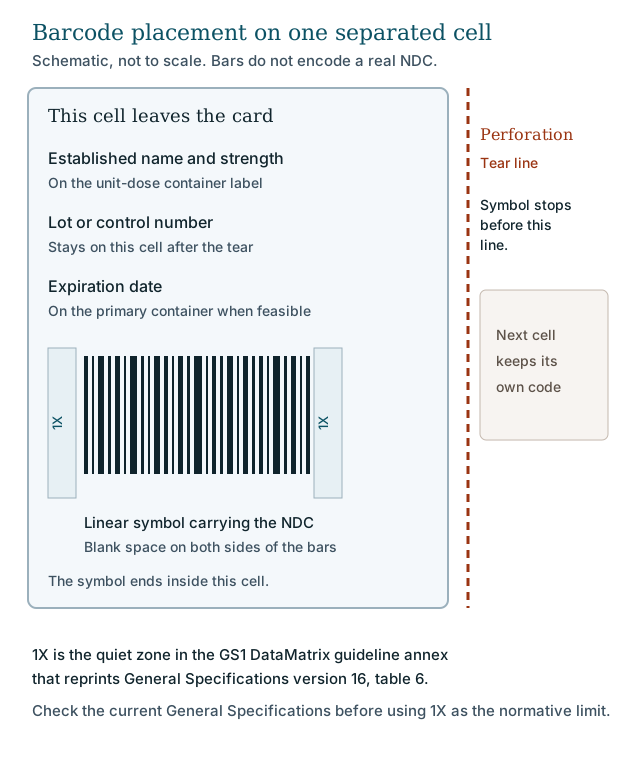
21 CFR 211.137(a) requires an expiration date determined by appropriate stability testing described in 211.166, so that the product meets applicable standards of identity, strength, quality and purity at the time of use. Section 211.137(b) ties that date to storage conditions stated on the labeling. The July 2020 guidance quotes the further placement point from 21 CFR 201.17: the expiration date for a drug in a single-dose container should be on the primary container unless that is not feasible, and when single-dose containers are packed in individual cartons the date may appear on the individual carton instead of the immediate container. A perforated cell that leaves both the header and any outer carton needs the date on the cell itself if the carton allowance is what had been carrying it.
The July 2020 guidance is enforcement discretion, and it is narrow. It addresses prescription and over-the-counter solid oral dosage forms repackaged into unit-dose containers by commercial repackaging firms that must register under section 510 of the FD&C Act and follow 21 CFR parts 210 and 211. It excludes other dosage forms, including liquids. It excludes products repackaged by state-licensed pharmacies, federal facilities, and outsourcing facilities under section 503B. A hospital pharmacy that is a state-licensed pharmacy is outside this discretion. The guidance points those repackagers to separate guidance.
Inside the scope, FDA generally does not intend to act on nonconformance with 211.137 and 211.166 if the repackaged product is labeled with an expiration date that does not exceed the shorter of two periods, and if five circumstances are all present:
- Six months from the date of repackaging.
- 25 percent of the time between the date of repackaging and the expiration date on the original manufacturer’s container.
The five circumstances are: the unit-dose container meets USP General Chapter <671> Class A, or Class B when moisture-permeability data, moisture-sensitivity data and a risk assessment support that Class B container for the whole assigned date; light protection at least equal to the original container when the manufacturer indicates light sensitivity; the original container not previously opened, with the entire contents repackaged in one operation; repackaging and storage consistent with the original labeling, or controlled room temperature and a dry place as defined in USP <659> when temperature and humidity are not specified; and no caution against repackaging on the labeling. The guidance names “Keep these tablets in the original container” and “Do not repackage” as examples of that caution. Class C and Class D containers, as the guidance states, do not meet circumstance (1).
A longer date still has to stay at or before the original manufacturer’s expiration, the five circumstances still have to be present, and supportive studies have to show that the repack container-closure is at least as protective as the original packaging. The guidance points to 21 CFR 211.166 for the stability-study sample and method requirements, including the requirement that samples be in the same container-closure system as the marketed product.
The guidance also quotes USP General Chapter <1178> Good Repackaging Practices, from USP 42-NF 37, recommending that the expiration date not exceed the earliest of 6 months from repackaging, the manufacturer’s expiration date, or 25 percent of the time between repackaging and the expiration date on the manufacturer’s bulk container. This page uses the FDA discretion sentence for the calculation below, and it does not treat the USP chapter as independently re-read.
CPG 430.100, issued 1 February 1984 and still published on the FDA guidance page read on 20 October 2026, is the labeling list for oral solid and liquid unit-dose containers. Its Attachment B still describes an older six-month and 25 percent policy and points to CPG 7132b.11. FDA’s page for CPG 480.200, the later number of that policy, records that it was withdrawn on 30 July 2020. The expiration arithmetic used here is the July 2020 guidance, not Attachment B.
Let R be the repackaging date and M the expiration date on the original manufacturer’s container.
Remaining time T = M − R.
Discretion ceiling D = the shorter of (6 calendar months after R) and (0.25 × T).
Worked example. R = 20 October 2026. M = 20 October 2027. Both dates are chosen so the arithmetic can be checked. They are not a product’s dating.
T = 365 days. 0.25 × 365 days = 91.25 days. Six calendar months after 20 October 2026 is 20 April 2027, which is 182 days later. The shorter period is 91.25 days. The last whole day that does not exceed 91.25 days is 19 January 2027, 91 days after R. A label date of 20 January 2027 is 92 days after R, which is past 25 percent of this interval.
The same formula with a longer original date can make the 6-month cap the shorter one. That is a second substitution, not a second rule. The five circumstances and the scope limits still apply, and a state-licensed pharmacy is still outside the guidance.
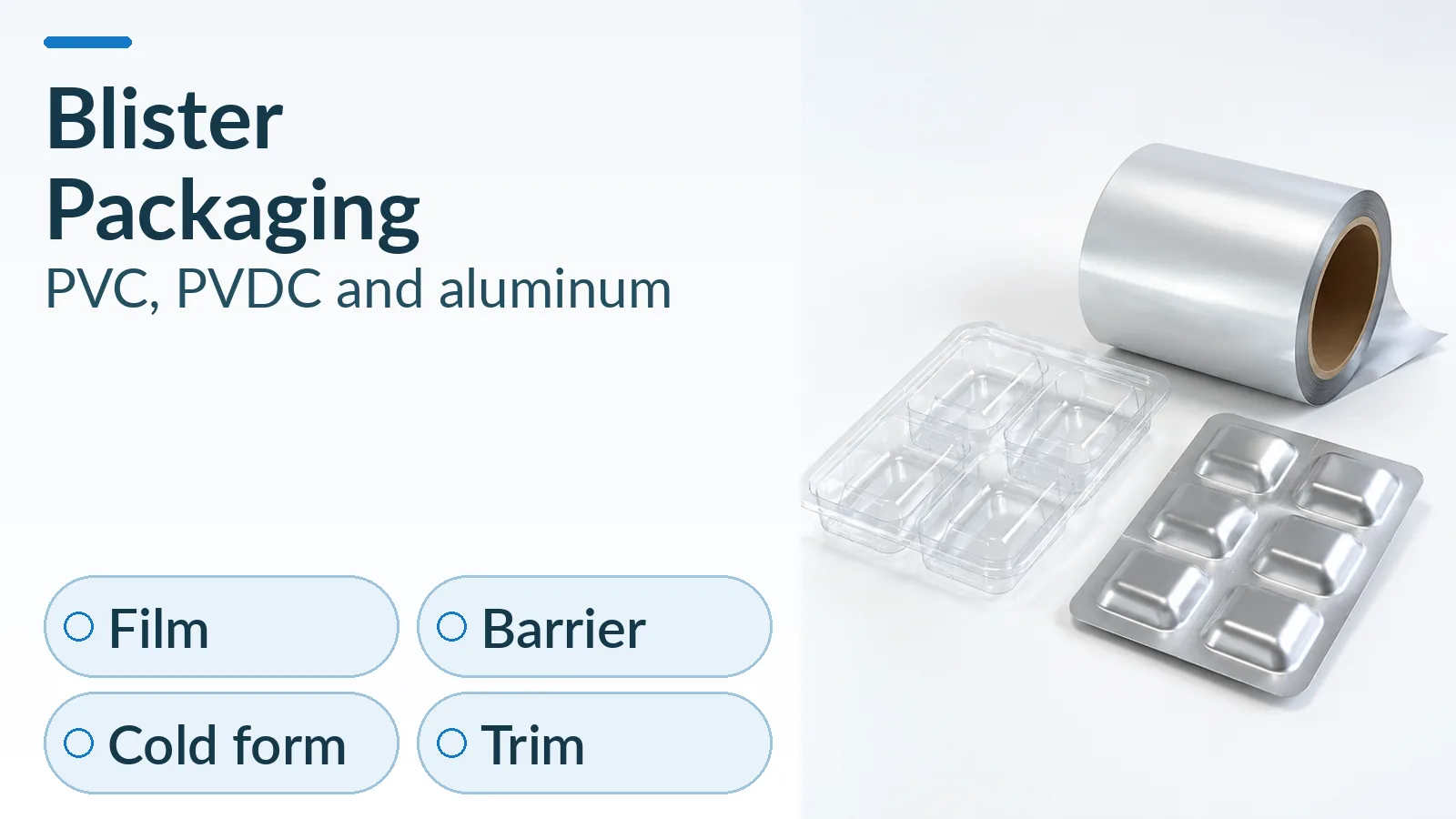
The forming web behind the cell is a separate choice. PVC, PVDC-coated film and cold-form aluminum are compared there against the finished pack’s barrier evidence. Class A and Class B in USP <671>, as named by the July 2020 guidance, are container performance classes for the repack dating discretion. They are not a substitute for that forming-web comparison.
What an unscannable cell consumes
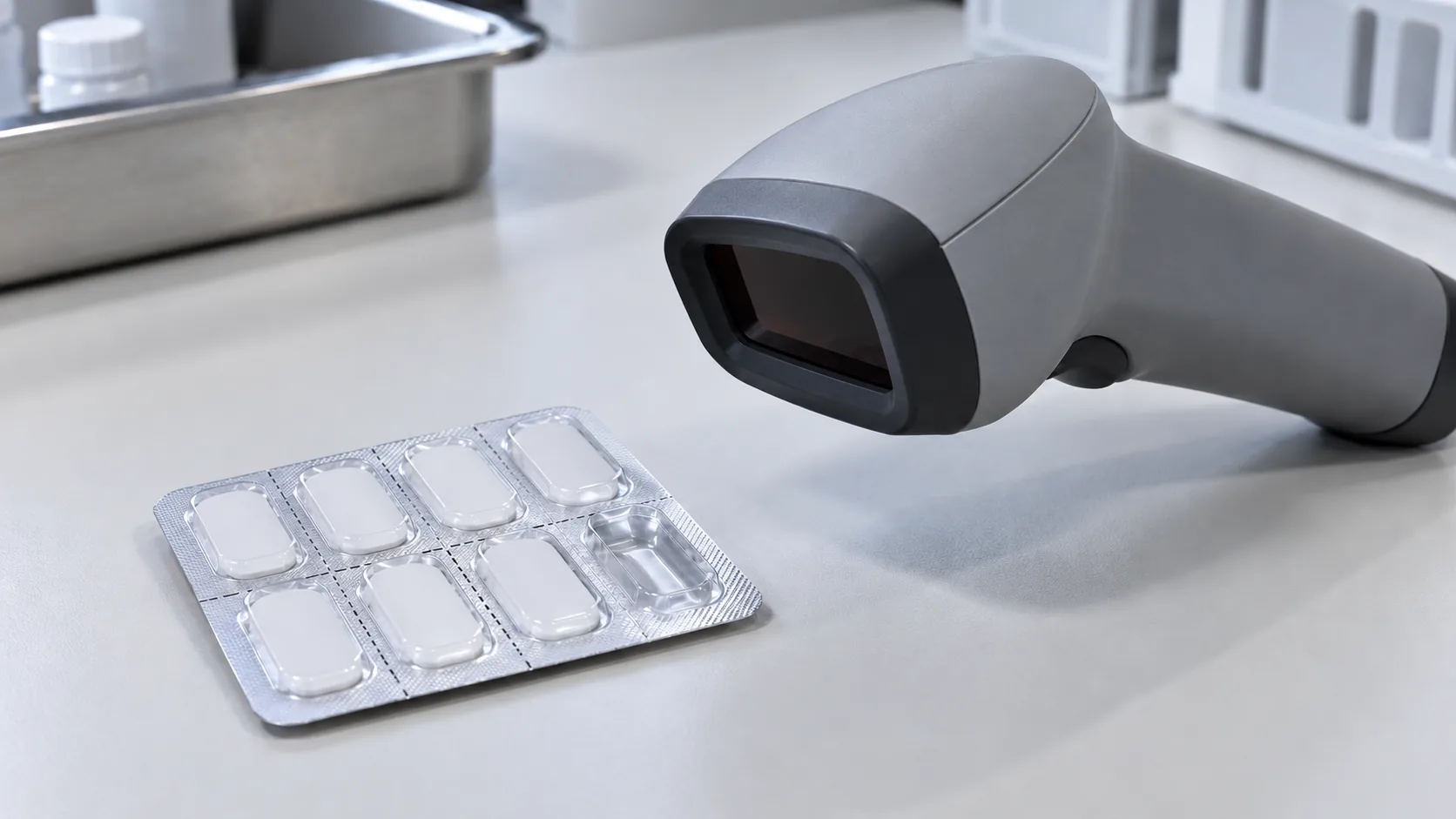
A cell that cannot be scanned is held out of administration, relabeled, or discarded. The cost is the dose itself, the replacement on the cart, and the time between the failed scan and a dose that can be checked. No dollar amount is assigned here, because none of the source documents prices that rework.
An overwrap that blocks the scan adds a second barcode, which is another print and another scan at dispensing, following August 2011 guidance Q14. A commercial solid-oral date past the July 2020 ceiling, or a container outside Class A or the supported Class B case, brings the stability study in 211.166 back into the record, including samples in the container-closure that will actually be marketed. Light-sensitive products add a comparison of light protection against the original container. A caution on the original labeling against repackaging ends the discretion path for that product.
Those costs sit on the pack in contact with the dose, which is the primary layer on Primary, secondary and tertiary packaging. The earlier choice between a blister and a bottle is on Blister and bottle packaging. How a pack defect relates to whether a medicine is available at all is on Packaging and medicine availability. The surrounding pages are indexed from pharmaceutical packaging.
Method and sources
CFR text was read on 20 October 2026 from the Cornell Law School mirror of the eCFR, after the eCFR site refused an automated request. The August 2011 barcode guidance, the June 2021 DSCSA product-identifier questions and answers, and the July 2020 unit-dose expiration guidance were read from FDA files retrieved the same day. CPG 430.100 was read from FDA’s guidance page. The 5 March 2026 final rule was read from the Federal Register. The ASHP unit-dose statement was read from the Society’s PDF, retrieved through the Internet Archive after the ASHP address returned HTTP 500. GS1 section 2.1.5 was read from a text extract of General Specifications Release 25.0. The X-dimension figures were read from the DataMatrix Guideline annex that reprints version 16, table 6, and are labeled as that extract.
The quiet-zone arithmetic uses only those version-16 X values. The expiration example uses only the two periods in the July 2020 discretion sentence, with the two calendar dates stated as example inputs. No perforation force, no scanner success rate, and no machine model is stated, because none of those documents supplied one.
Updated October 2026.