Treating a stick pack and a sachet as the same pouch fails when the fill volume, the tear and the space for identity are different. The waste is a format chosen from a food demonstration and then described as suitable for a medicine.
This comparison is based on pack geometry, not on a test by this site. A sachet here means a flat pouch. A stick pack means a narrow tube sealed at the ends. Both can be the pack in contact with the contents. A run on a food product is not evidence about a medicine.
| Item | Sachet | Stick pack |
|---|---|---|
| Shape on this page | Flat pouch | Narrow tube |
| In contact with the contents | Yes, when it is the primary pack | Yes, when it is the primary pack |
| Food trial as medicine evidence | No | No |
What has to be written before a format is preferred
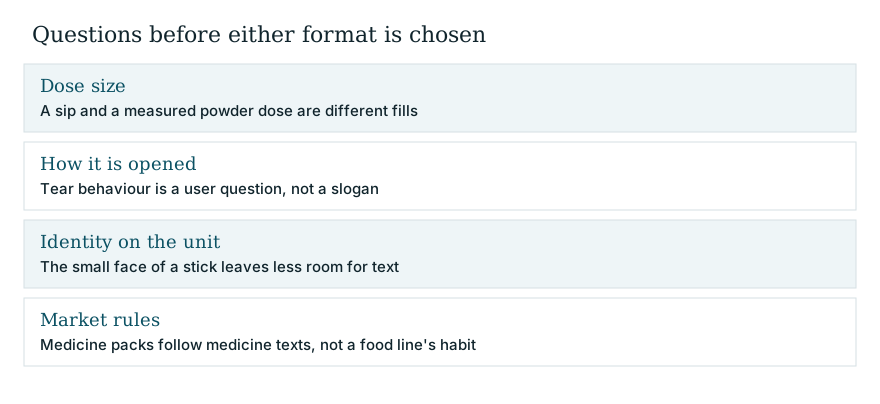
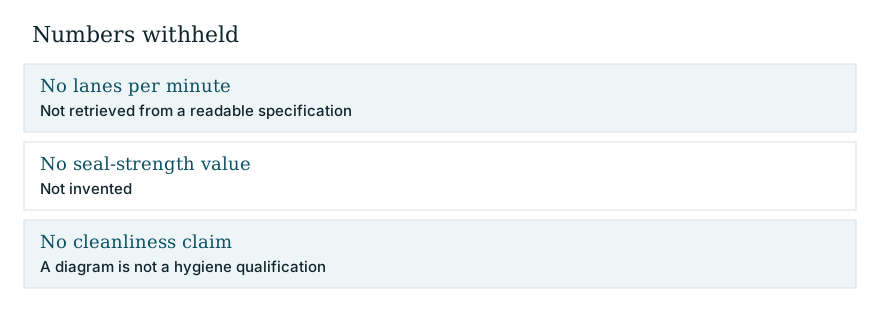
Dose size, how the user opens the unit, and whether the identity and any required warning fit on that unit come before a preference. Medicine requirements are the texts for that product and market. They are not copied across from a nutrition or food line. This page does not state a seal strength, a lane count or a cleanliness class.
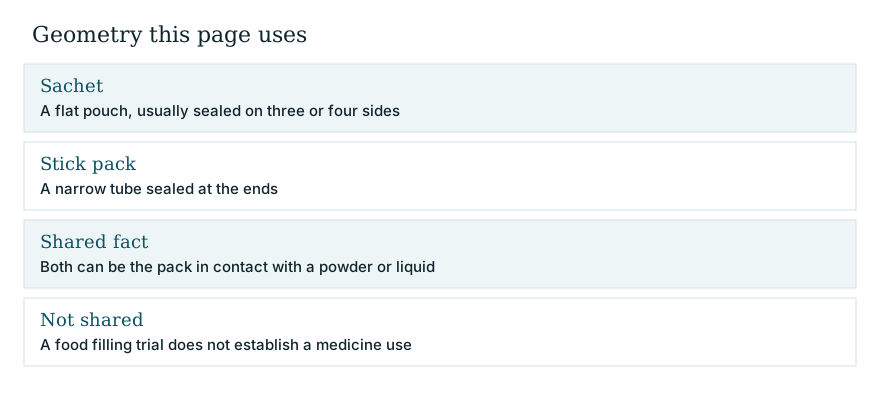
Both forms use the primary-pack label from Primary, secondary and tertiary packaging. Format choices belong on the requirement checklist as product facts, not as a machine catalogue. Blister and bottle packaging is a different pair of contact packs.
How this page was put together
The shapes are definitional for this site so later pages do not swap the names. Vendor speeds in the research index were not used, because a readable specification was not retrieved on 14 October 2026. No food result is recast as pharmaceutical evidence.