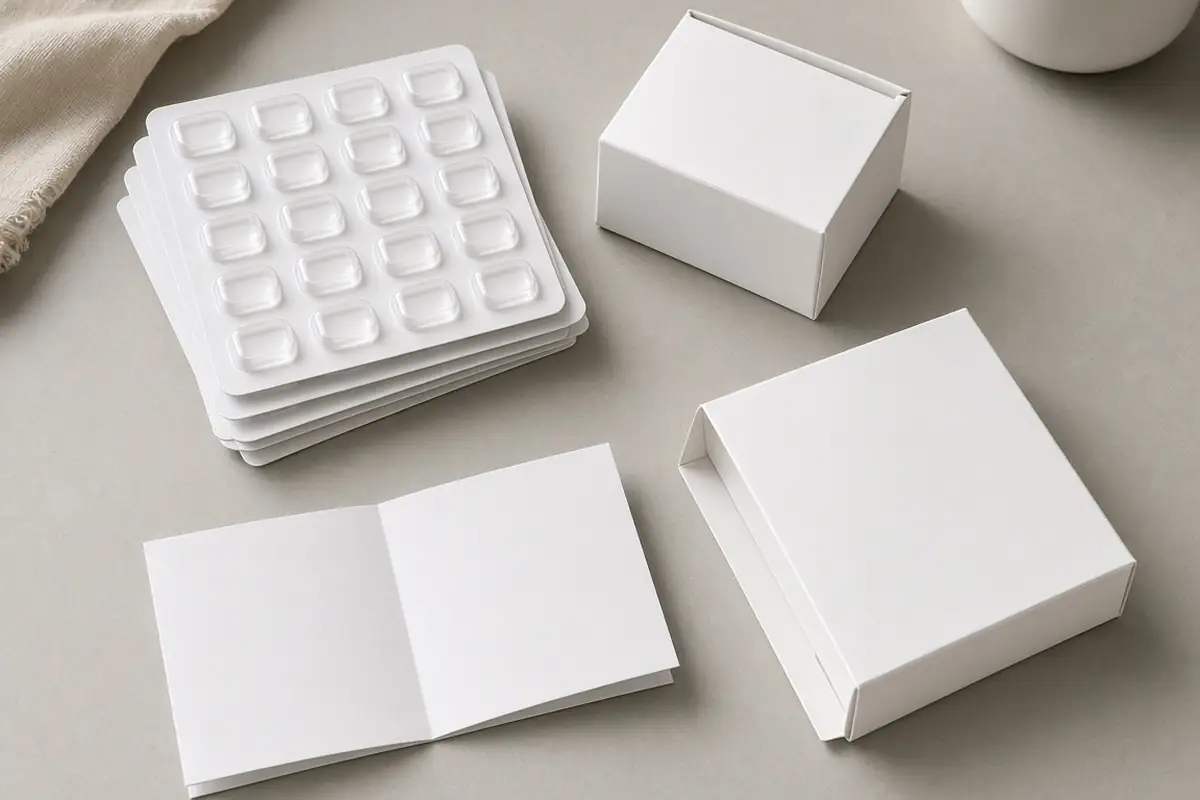
Choosing a blister because it “always protects better”, or a bottle because it “always costs less”, fails when the dose count, the user and the market rule point the other way. The damage is a pack that is awkward to dispense or that was never supported by the product’s own stability evidence.
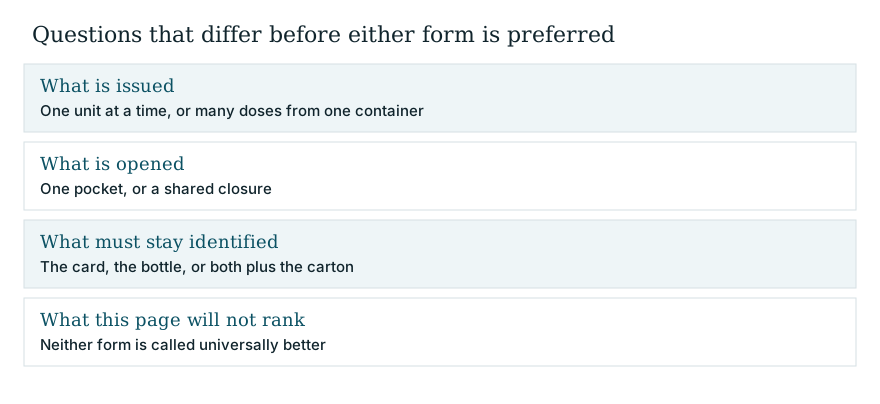
This comparison is based on public descriptions of the two forms, not on a test by this site. A blister card presents doses in separate pockets. A bottle holds many doses behind one closure. Neither sentence is a ranking.
| Question | Blister card | Multi-dose bottle |
|---|---|---|
| What the user opens | One pocket at a time | A shared closure |
| What is in contact with the dose | The pocket and its lid | The bottle and its closure |
| What this page concludes | Not a universal winner | Not a universal winner |
Conditions that should be written down first
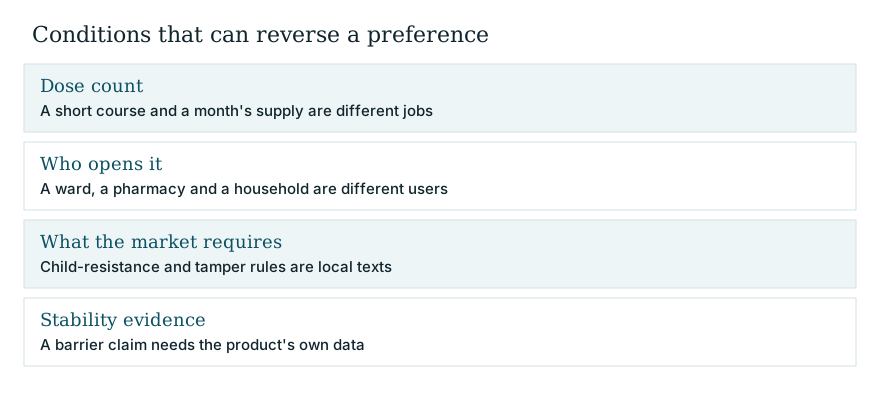
The useful comparison starts from the course length, who opens the pack, and which written requirement applies in the market. Child-resistant and tamper-evident duties are legal and standard texts. They are not inferred from a photograph of a card or a bottle. A barrier claim for moisture or light belongs to the product’s own data, which this page does not hold.
What is shared
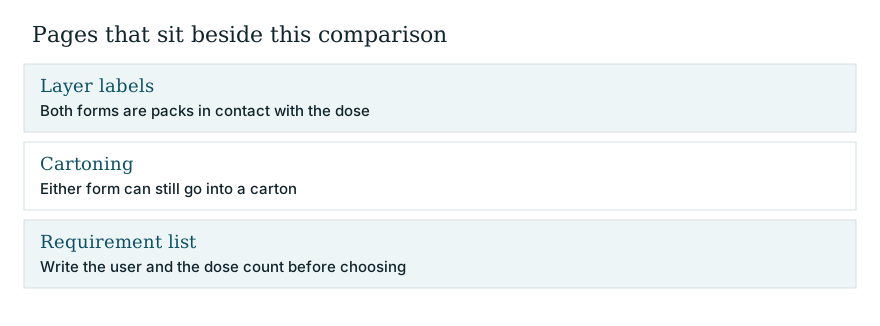
Both forms are packs in contact with the dose under the labels on Primary, secondary and tertiary packaging. Either can still be placed in a carton, which is the subject of Pharmaceutical cartoning. The requirement checklist asks for the user and the dose count before a form is discussed.
How this page was put together
The table is a set of questions, not measured transmission rates. No vendor model is named. The WHO medicines page is cited only for the quality-assured product context, not as a blister specification.