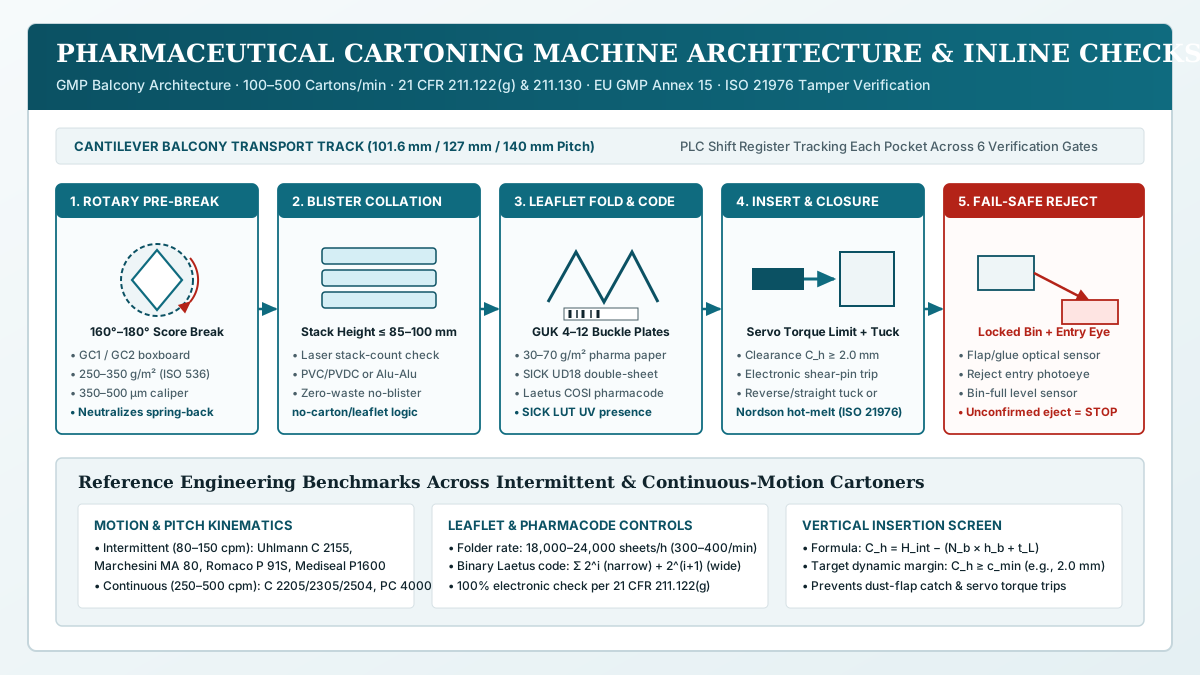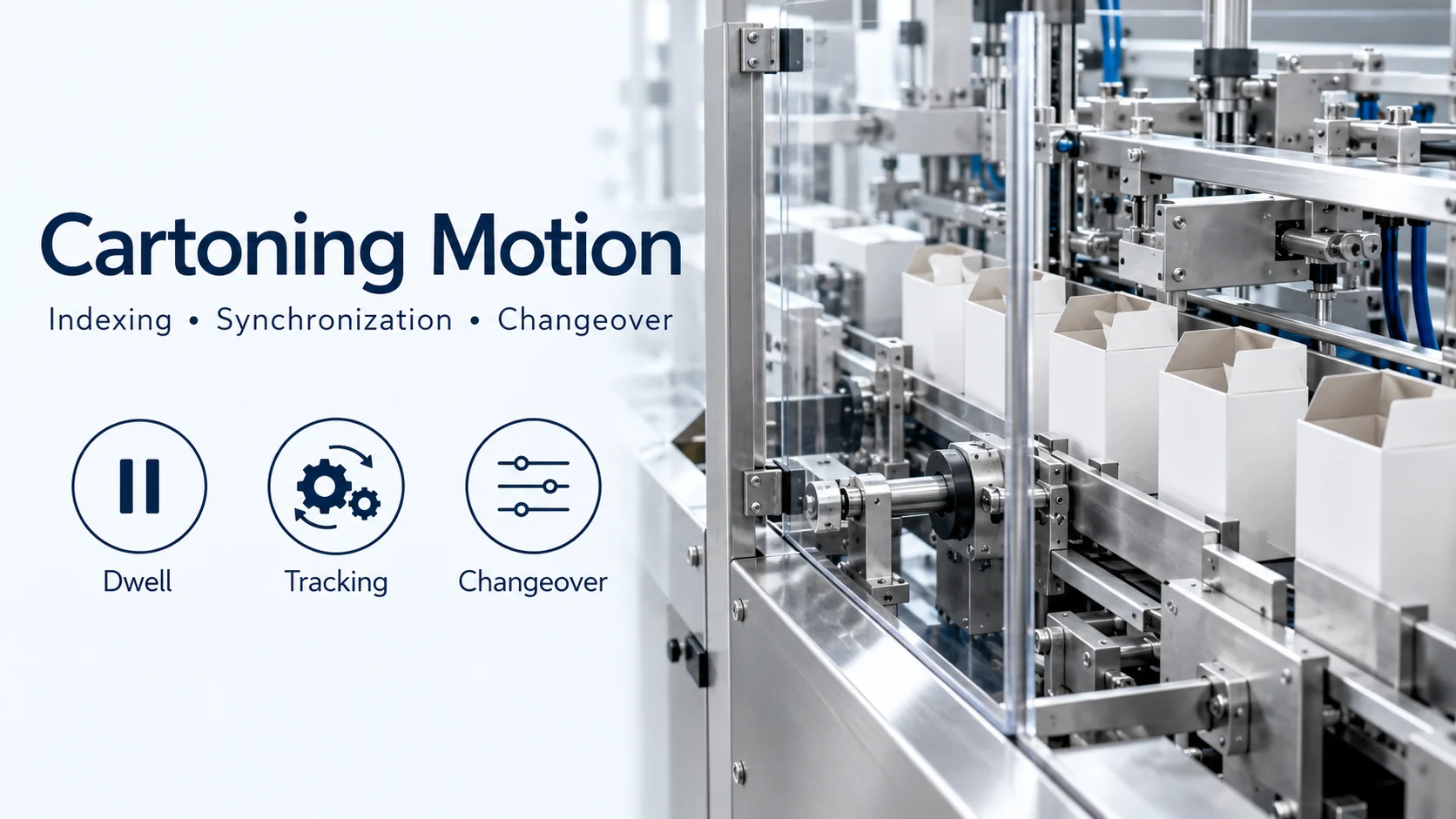
Intermittent carton transport advances by an indexed pitch and pauses at key stations. Continuous-motion insertion mechanisms track or synchronize with moving cartons. For an automatic cartoning machine, start the selection discussion with the carton movement, insertion sequence and format-change tasks.
Use this guide to review a pharmaceutical cartoner proposal or prepare a motion demonstration. For the wider packaging context, browse pharmaceutical packaging; for the station-by-station overview, see the pharmaceutical cartoning process.
Intermittent vs continuous: what to examine
| Motion | Working principle | Review task |
|---|---|---|
| Intermittent | Product and leaflet insertion can take place during the dwell period. | Ask to see carton positioning, insertion and withdrawal on the cycle trace. |
| Continuous | Continuous-motion insertion mechanisms track or synchronize with moving cartons. | Ask to see the insertion mechanism tracking the carton through loading. |
Bring the intended product, carton and leaflet to this discussion. Ask for the demonstration to identify the transport motion and the drive arrangement separately. Record the proposed format and operating rate alongside the motion trace.
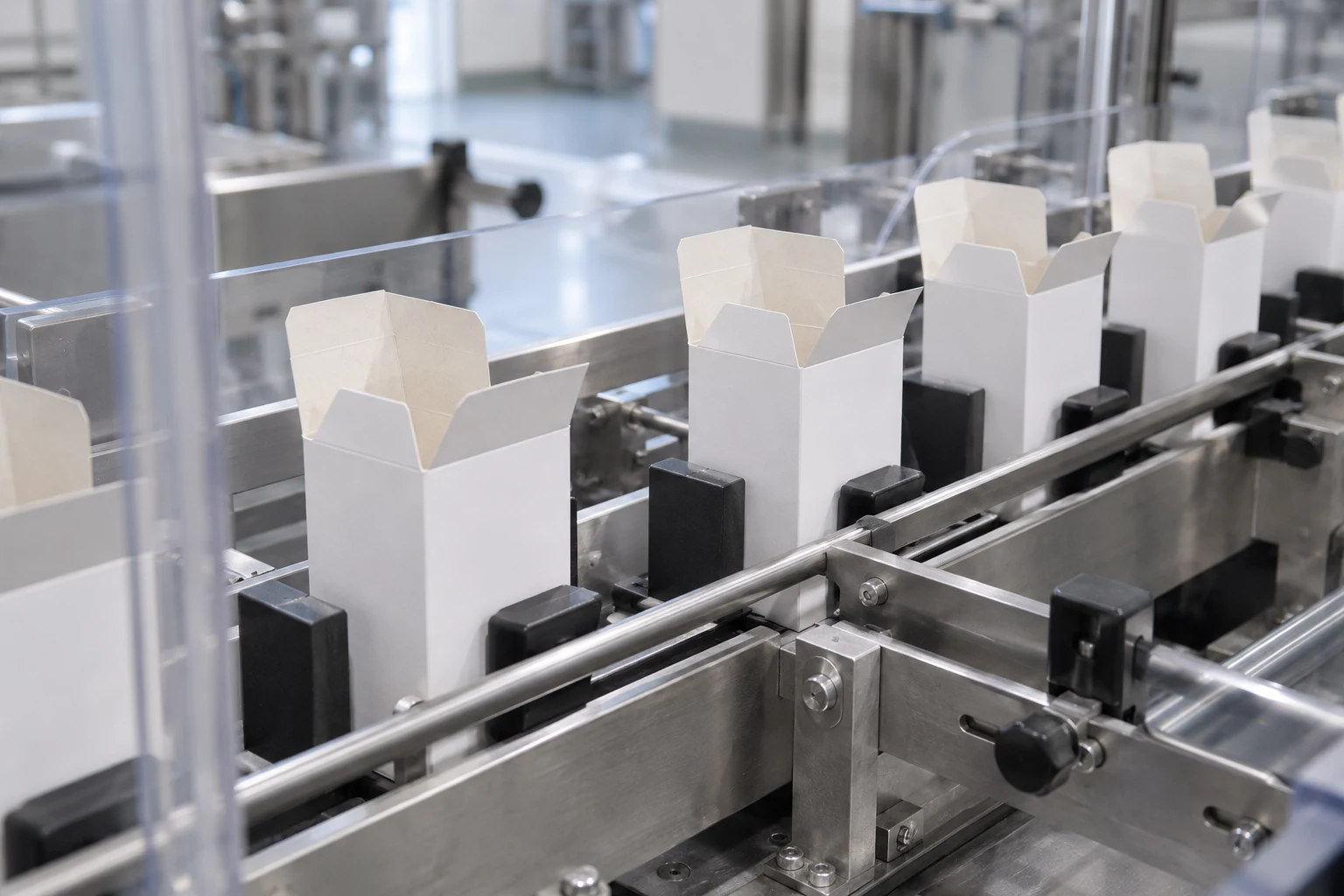
Cam indexing: read the output dwell and input speed separately
Dwell is the portion during which the indexer output does not move. At continuous camshaft speed, motion and dwell angles determine motion and dwell times. Use these distinctions when discussing the cartoning machine working principle: ask which shaft or mechanism each timing label refers to.
The time formula is t = B /6/ N, with B in degrees and N the camshaft rpm. Apply the formula to the motion or dwell angle under the constant-speed camshaft condition.
In the CAMCO indexer example, the index time is 0.25 sec. In the same CAMCO indexer example, the dwell time is 0.75 sec. Use this mechanical example to distinguish the index interval from the dwell interval, then request the proposed cartoner’s own insertion sequence.
Cycle-on-demand operation can pause the indexer in dwell for the required operation. Ask whether the proposed indexer runs synchronously or cycles on demand, and request the corresponding timing description.
Acceleration and product handling
Controlled indexing comprises acceleration, peak velocity and deceleration phases. Cam-profile design controls velocity and acceleration throughout the indexing cycle. Modified Sine curves provide a smooth transition from peak acceleration to deceleration.
For a fragile-product trial, request the pusher motion trace at the proposed format and rate. Include the pusher stroke, peak acceleration, product support and observed product condition in the review record. Agree the acceptance criteria before the demonstration, and record the results against the exact product presentation.
Leaflet insertion: inspect the timing and the installed configuration
IMA-PG A300 is a continuous motion cartoner. A300 uses multiple pushers to push products into the carton. IMA-PG IC150C is an intermittent motion cartoner. Its online leaflet folding units are optional features.
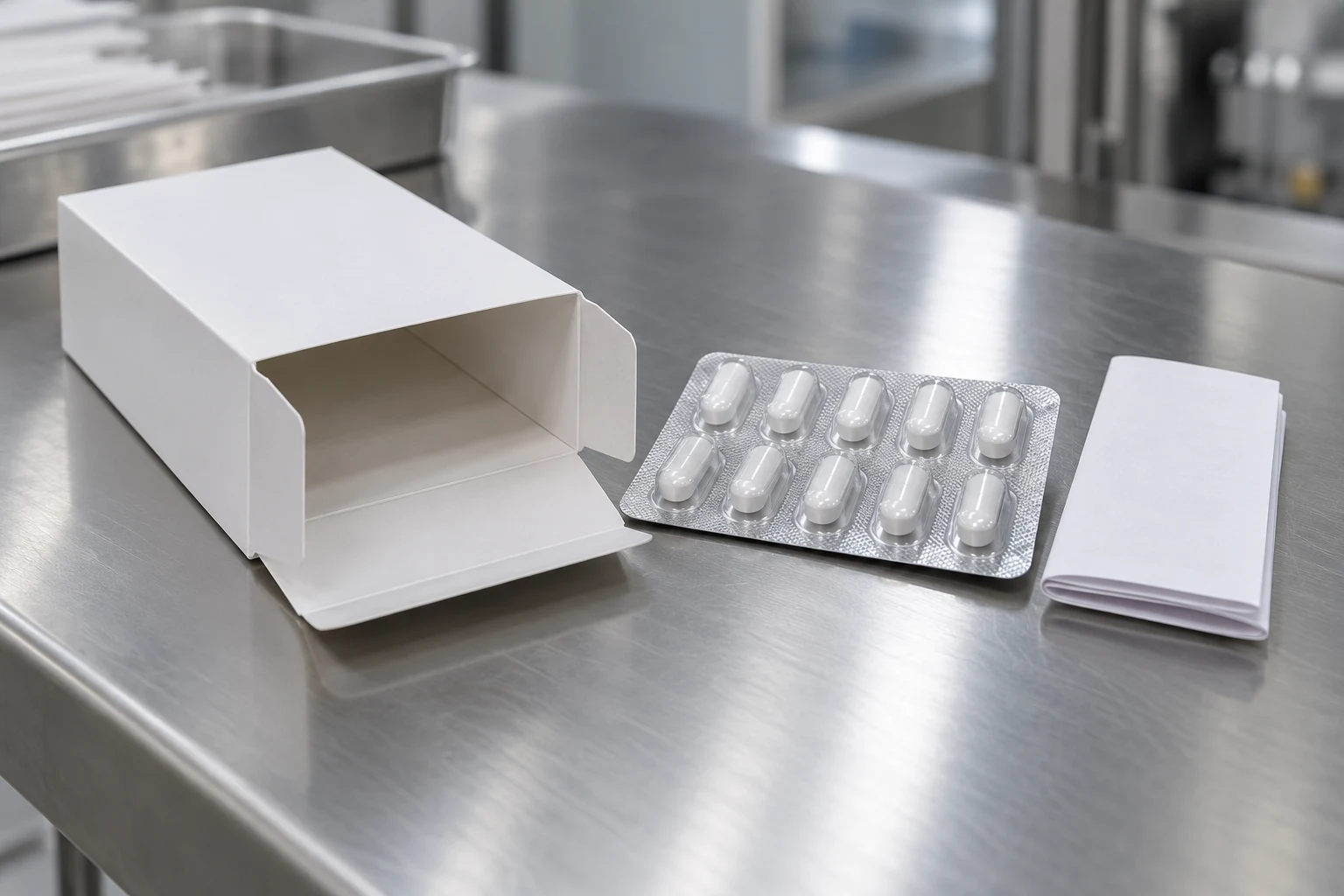
When preparing a trial, nominate the leaflet presentation and folding arrangement explicitly. Follow product readiness, leaflet readiness, insertion and withdrawal together on the cycle trace. Use the companion leaflet and tuck checks guide for the inspection discussion.
What does a timing parameter control?
In the Rovema CMK coupon application, Leaflet Feed Enable determines whether the leaflet device inserts coupons into the carton. Leaflet Feed On Pos and Leaflet Feed Off Pos determine the signal timing to the leaflet device. Leaflet Feed Compensation adjusts position timing for solenoid-valve reaction delay.
Use those named functions as prompts when reviewing the proposed machine’s controls: identify the enable condition, insertion signal timing and any compensation setting. Ask for each parameter to be explained against the actual feeder and operating sequence.
Can a cartoner combine motion types?
IMA DYNAMICA S can combine continuous and intermittent motion depending on the product fed. When reviewing a mixed-product proposal, ask for the intended motion mode to be identified for each product and feeding arrangement.
Changeover: separate recipe recall from physical work
Format-change time depends on machine complexity and the number of formats handled. Recipe recall controls servo settings; project-specific feeders, guides or format parts may still need to be exchanged if the product or carton structure requires different hardware.
Changing leaflet size on the IMA Roll-One leaflet-folding unit requires a part replacement. For Rovema CMK format adjustment, some machine parts must be moved before other parts.
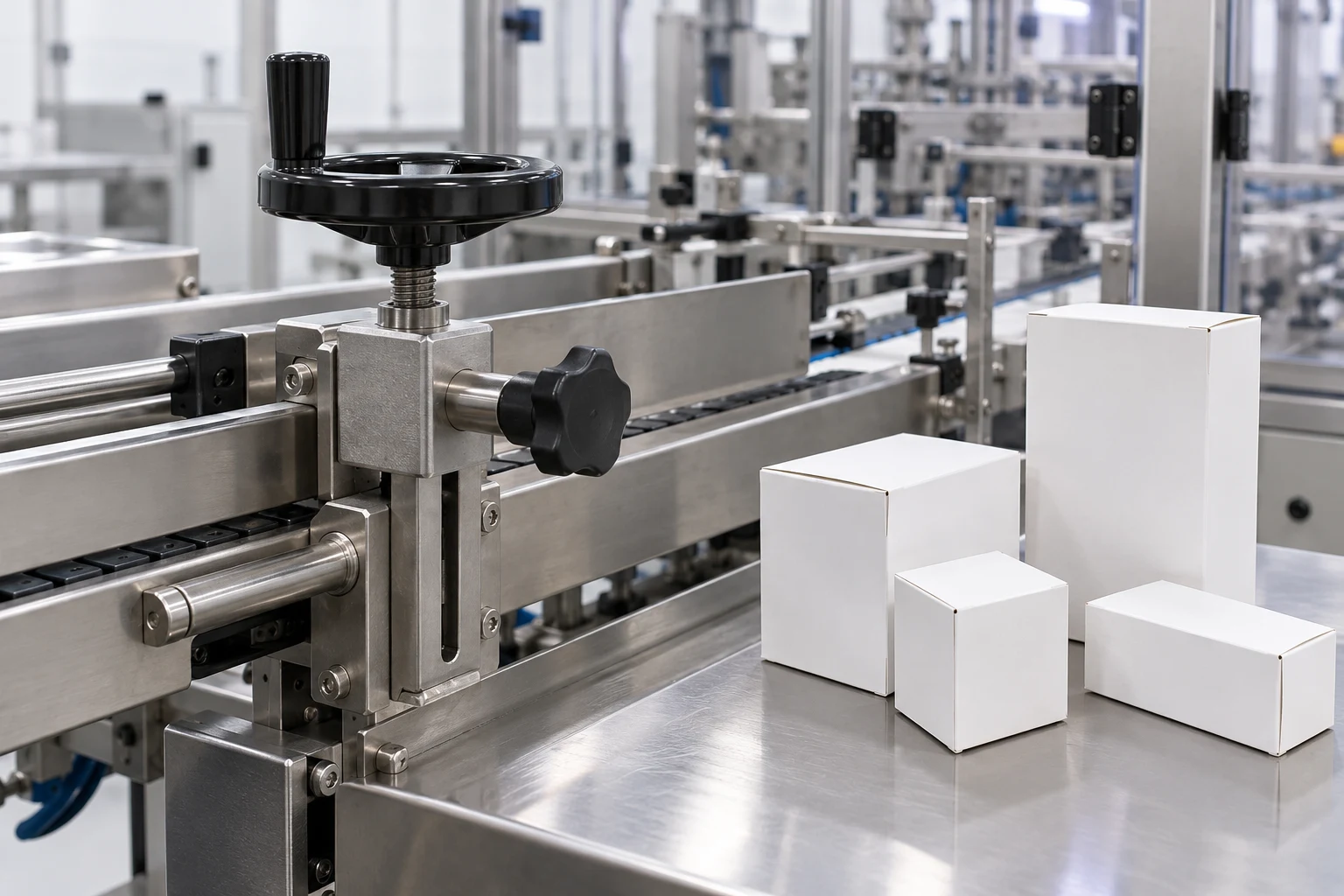
For your format-change demonstration, list the recipe selection, adjustment points, exchanged parts and work sequence separately. Choose a defined starting format and destination format. Include the leaflet arrangement and closure configuration in the record, and identify who carries out each task.
High speed cartoning machine review: use a common trial record
Compare the proposals against the same product presentation, format pair and acceptance criteria. Ask for operating-rate evidence and changeover evidence as separate records, then review the batch schedule alongside them. Use the checklist below during the demonstration.
| Review item | What to request or record |
|---|---|
| Product and packaging | List the product presentation, carton drawing, leaflet format and closure configuration. |
| Motion sequence | Identify carton motion, drive arrangement, product insertion and leaflet insertion on a shared timing trace. |
| Handling trial | Record the operating rate, motion settings, observed product condition and agreed acceptance criteria. |
| Format pair | Name the starting and destination formats; list recipes, adjustment points, tools and replacement parts. |
| Changeover boundary | Agree the start and finish events. Record elapsed time, personnel, checks and restart adjustments. |
| Batch record | Record accepted cartons, rejected cartons, material loss, interruptions and the operating schedule. |
Keep the completed record with the proposal and sample-pack details. Carry the selected requirements into the packaging equipment requirements checklist.
Sources
- Haiwang — How Does an Automatic Cartoning Machine Work?
- DE-STA-CO CAMCO — Engineering
- IMA-PG — Cartoning
- IMA — DYNAMICA Series
- IMA — Efficiency and changeover
- Rovema — Continuous Motion Cartoner Operator’s Manual