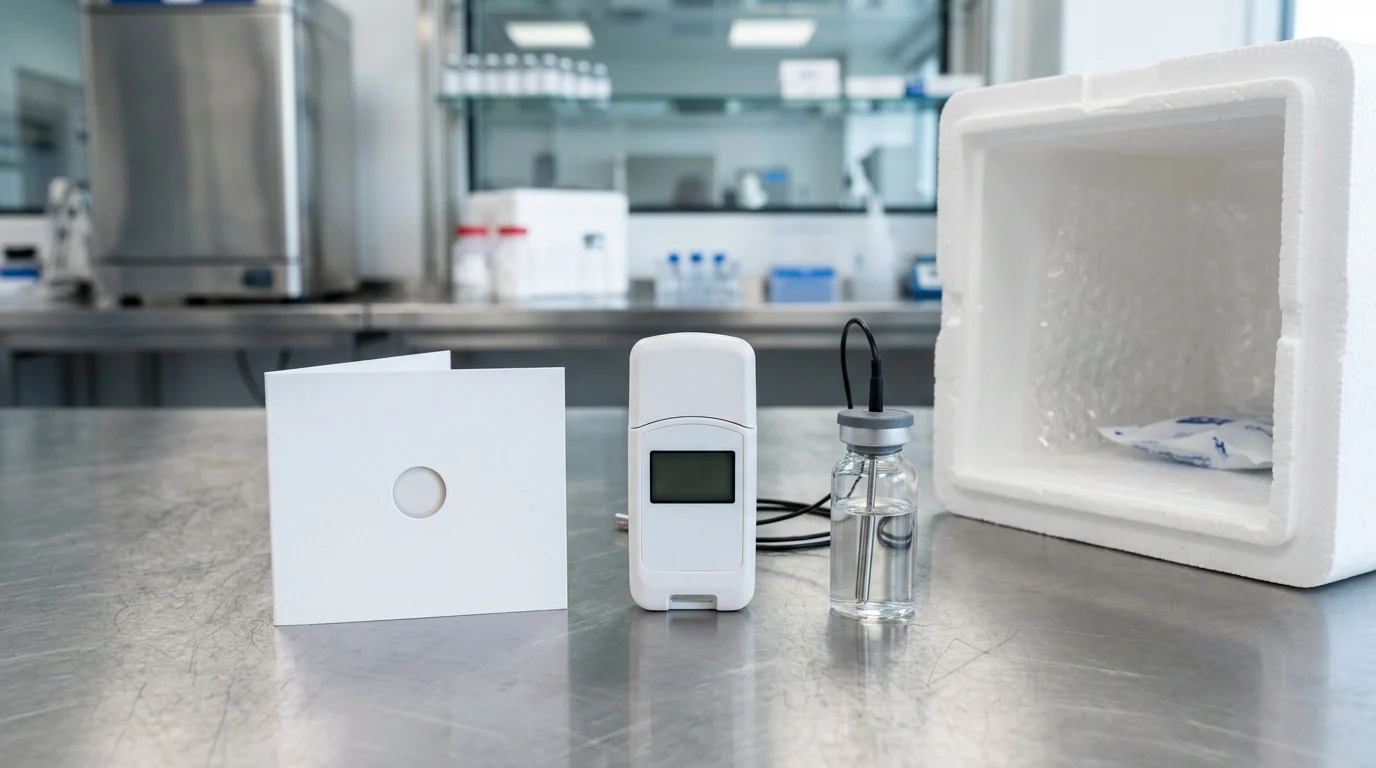
WHO PQS category E006 covers thermometers, freeze indicators, temperature recorders, data loggers, Equipment Monitoring Devices (EMDs), and event loggers for monitoring temperatures and other variables at all levels in the cold chain, including alarm systems.
Selecting a cold chain monitoring system requires aligning indicator chemistry, probe thermal lag, excursion mathematics, and insulated container qualification across the pharmaceutical supply chain and every handoff described in medicine supply chain explained to prevent rejected shipments and costly rework.
Go/no-go data from chemical indicators (CIs), chemical time-temperature integrators (CTTIs), and electronic temperature indicators (ETIs) should be recorded on the product arrival report to decide whether to accept the consignment into active storage or quarantine it pending investigation.
In most instances, downloaded time and temperature data from transport monitoring devices should be retained for at least 3 years in a non-volatile format that enables the data to be retrieved (such as printed hard copies, computer hard drive, tape drive, flash drive, or DVD, while storage in a secure web-based data repository may also be acceptable).
Compare cold chain monitoring solutions and indicators
| Device family | Operating mechanism and architecture | Cumulative indicators, hybrid data devices, event monitoring systems, and backup thermometers |
|---|---|---|
| Chemical threshold and progressive cold chain indicators | Threshold-type chemical indicators are irreversible, suitable for high or low temperatures, and typically are single-use devices that provide a signal only when exposed to temperatures higher than (ascending indicator) or lower than (descending indicator) a predetermined threshold temperature. | Progressive-type chemical indicators register multiple events in a cumulative way, where the reaction is activated whenever the threshold temperature is exceeded and the indicator usually takes the form of a progressive colour change along a paper strip. |
| Electronic temperature indicators and hybrid integrators | An electronic temperature indicator (ETI) is a compact, portable device that measures temperature over time by means of a built-in sensor using four basic components: a thermistor sensor, a microprocessor, a memory chip, and a power source (lithium battery). | An electronic data integrator (EDI) is a hybrid electronic instrument intelligently programmed like an electronic temperature indicator (ETI) with the report and data-producing capabilities of an electronic data logging monitor (EDLM) that combines the features and functions of a go/no-go device with the record retention and data tracking of an EDLM. |
| Portable data logging monitors and remote event systems | An electronic data logging monitor (EDLM) is a small portable device that measures and stores temperature at predetermined time intervals by means of an electronic sensor, offering programmable alarm capabilities, integrated displays, and the ability to create reports and graphs. | An electronic temperature monitoring and event logger system records and reports air and/or product temperatures, with optional facilities for recording and reporting specific events such as door-opening or defrost cycles and for issuing alarms, and such systems may be user-programmable and may also be remotely monitored via a satellite link. |
| Calibration and legacy device boundaries | Single-use monitoring devices should be supplied with a manufacturer's calibration certificate covering the entire temperature range over which the device is designed to be used and cannot be recalibrated, whereas multiple-use devices should be calibrated against a certified, traceable reference standard once a year, unless otherwise justified. | A stem thermometer can be fitted in refrigerators, freezers, cold rooms, and freezer rooms as an inexpensive back-up device for required 30-day temperature loggers, but stem thermometers should never be used as the primary temperature monitoring device because they do not provide a continuous record of vaccine temperature exposure, and bi-metallic dial thermometers are no longer recommended by WHO. |
Specify WHO PQS indicators, vaccine vial monitors, and USB loggers
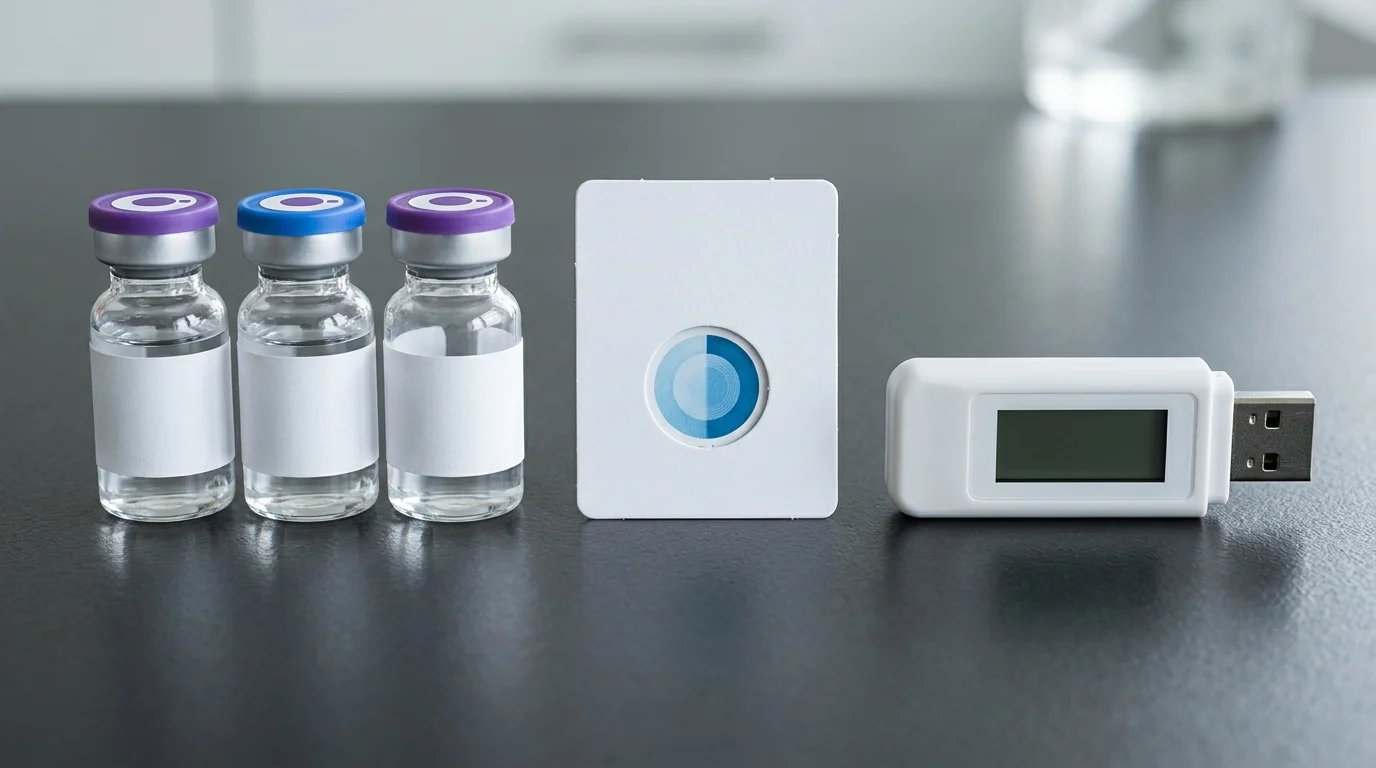
WHO no longer recommends Cold Chain Monitor cards (CCM) for in-country use; their use should now be confined to international shipments only where dry ice is used.
Freeze indicators should be used routinely for internal distribution of freeze-sensitive vaccines and for monitoring freezing events in cold rooms and vaccine refrigerators.
Coordinate primary-vial indicator placement with carton and pallet layers in primary, secondary and tertiary packaging.
Vaccine vial monitor reaction rates and placement rules
| Stability category | Reaction rate across reference temperatures |
|---|---|
| High stability | Under WHO/PQS/E006/IN05.4 Table 1a, VVM30 (High Stability) has a maximum time to end point of 30 days at +37°C, 193 days at +25°C, and ≥4 years time to end point at +5°C. |
| Medium and intermediate stability | Under WHO/PQS/E006/IN05.4 Table 1a, VVM14 (Medium Stability) has a maximum time to end point of 14 days at +37°C, 90 days at +25°C, and ≥3 years time to end point at +5°C; VVM11 (Intermediate Stability) has 11 days at +37°C, 71 days at +25°C, and ≥2.5 years at +5°C. |
| Moderate and low stability | Under WHO/PQS/E006/IN05.4 Table 1a, VVM7 (Moderate Stability) has a maximum time to end point of 7 days at +37°C, 45 days at +25°C, and ≥2 years at +5°C; VVM2 (Low Stability) has 2 days at +37°C and 225 days maximum time to end point at +5°C. |
| Very low and extremely low stability | Under WHO/PQS/E006/IN05.4 Table 1a, VVM1 (Very Low Stability) has a maximum time to end point of 1 day at +37°C and 100 days at +5°C, while VVM0.5 (Extremely Low Stability, with Arrhenius reaction rates determined at 25°C and 5°C) has an approximate maximum time to end point of 0.5 days at +37°C and maximum times to end point of 2 days at +25°C and 28 days at +5°C. |
Under WHO/PQS/E006/IN05.4 clause 4.2.6, the expected total uncertainty for measuring the optical density difference between the reference surface and active surface is ±0.03 (±0.02 for a single measurement), and VVMs should be tested in water baths or incubators whose mean kinetic temperature is controlled to within ±0.2°C.
Under WHO/PQS/E006/IN05.4 clause 4.2.8, for multi-dose vials containing a vaccine that can be used in subsequent sessions the VVM must be permanently attached to the label of the vaccine vial, whereas for vaccines that must be discarded at the end of the session or within 6 hours (whichever comes first) the VVM must be located on the flip-off top of a vial or on the neck of an ampule, and locating the VVM on the bottom of a vial or ampule is never acceptable.
Electronic freeze indicators and USB PDF data loggers
WHO PQS prequalified device E006-007 (applicable PQS specification E006/IN03.1) is an irreversible temperature indicator that shows if a product such as vaccine has been exposed to freezing temperatures, changing its display from the “OK” status symbol into the “ALARM” status symbol (x) if exposed to a temperature below -0.5°C ±0.5°C for more than 60 min ±3 min.
WHO PQS E006-007 specifies a working temperature range of -20 °C to 50 °C, accuracy of ±0.5 °C, IP67 ingress protection, a non-replaceable lithium coin cell battery with a 60-month battery shelf life from manufacture date, and a 2022 base price of 8.90 USD per unit at a minimum order of 500 units.
WHO PQS prequalified device E006-038 (specification PQS/E006/IN03.1) operates from -25 °C to 60 °C with ±0.5 °C accuracy, IP64 ingress protection, 3 years activated battery life, and memory capacity for 1,096 MIN/MAX events and 540 real-time measurements; if temperatures go below -0.5 °C for more than 60 minutes continuously, the LCD shows a REJECT symbol and the indicator stops and cannot be reset (base price 6.50 USD for 50–999 units).
In the WHO PQS E006 catalogue (specification E006/TR05.1), a single-use data logger with 24,200-reading memory capacity and IP54 ingress protection automatically generates an evaluation report in PDF format upon connection to a USB port with no equipment and no software required, supporting up to 8 temperature alarm levels with single or cumulative delays and an alarm on Mean Kinetic Temperature (MKT) (2023 base price 31.06 USD for 40+ units).
Position probes and glycol thermal buffers in storage and transit
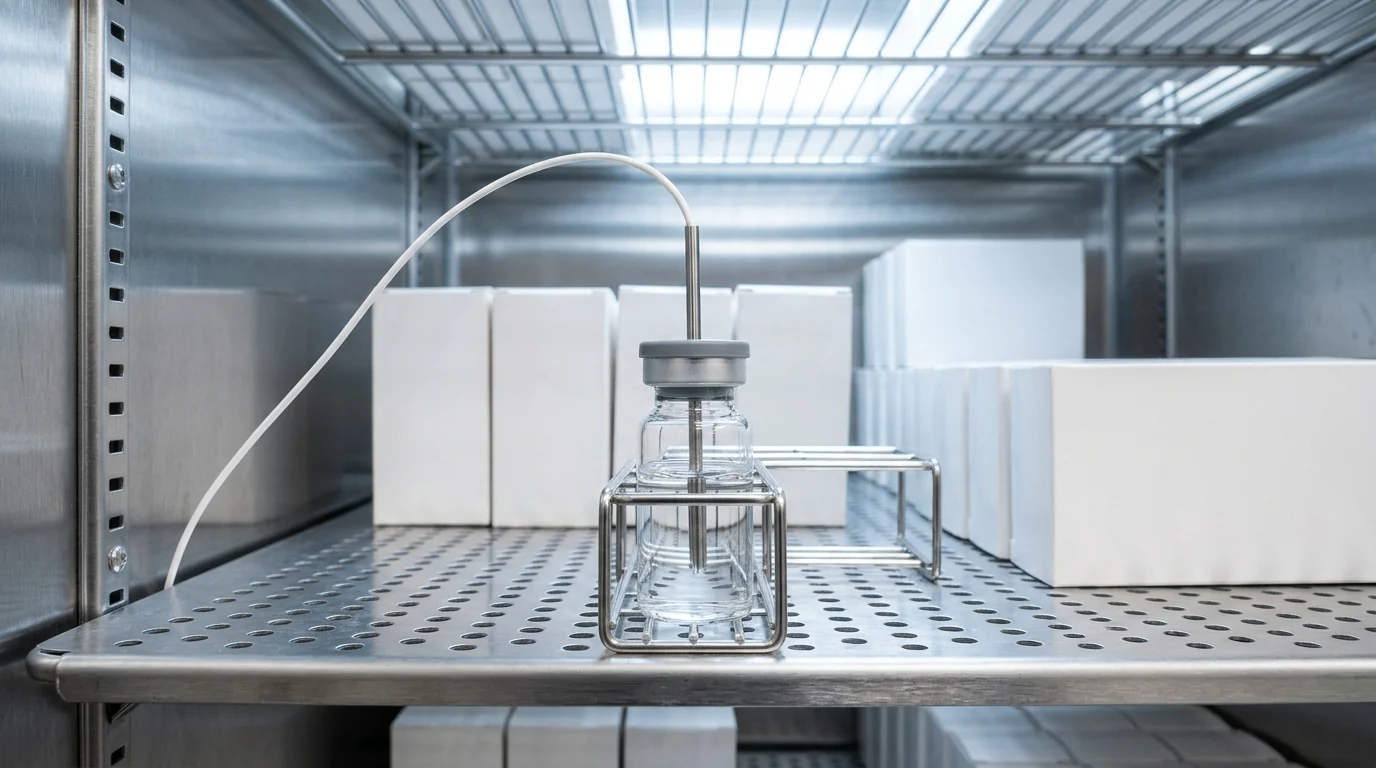
In the WHO PQS E006 catalogue, a reusable vaccine data logger with an external probe sealed in a 5 ml glycol bottle (32,496-reading memory capacity and ±0.5 °C accuracy from -50 °C to 25 °C) prevents false alarms by buffering the probe against sudden and expected temperature fluctuations during normal use, such as frequent door openings and cycling of the refrigerator or freezer, while emulating temperature changes experienced by most common fluids in storage.
Under WHO Annex 9 clause 4.5.1, minimum requirements for thermostatic temperature control in storage areas include control sensors accurate to ±0.5 °C or better, positioned at the hot and cold spots determined by temperature mapping (even if affected by door opening, unless recommendations are being made not to store products in such areas), and independent of the temperature monitoring system.
Under WHO Annex 9 clause 4.5.2, minimum requirements for storage air temperature monitoring include monitoring sensors accurate to ±0.5 °C or better for electronic devices and ±1 °C or better for alcohol, bi-metal gas, or vapour pressure thermometers, positioned so as to be minimally affected by transient events such as door opening, manually checked at least twice a day in the morning and evening seven days a week, and providing a temperature record with a minimum recording frequency of six times per hour.
Under WHO Technical Supplement 6 (Temperature and humidity monitoring systems for fixed storage areas) clause 2.5.2, sensors in ambient and controlled ambient storage areas are positioned in the places where seasonal hot and cold spots have been observed during the mapping studies, and monitors should not be placed in areas where transient events such as a door opening may affect the monitoring and generate an abnormally high number of alarms.
Under WHO Technical Supplement 8 Step 4, acceptance criteria (for example, +2.0 °C to +8.0 °C or +15.0 °C to +25.0 °C) specify that when a temperature-mapping study is designed to include door openings, the temperature should be maintained within the defined temperature limits except for a maximum of 30 minutes following the door opening, while Step 5 specifies arranging EDLMs in a grid fashion every 5–10 metres (or up to 20 or 30 metres in very large facilities) and, if the ceiling height is 3.6 metres or less, positioning EDLMs directly above one another at high, medium, and low level (e.g., one EDLM at floor level, one at 1.2 metres, and one EDLM at 3.0 metres).
Under WHO Annex 9 clauses 6.5.2 and 6.5.3, minimum requirements for temperature-controlled road vehicles include air temperature monitoring sensors accurate to ±0.5 °C located to monitor worst-case temperatures within the qualified storage zone with a minimum recording frequency of six times per hour for each sensor position, while humidity monitoring systems and devices should comply with minimum requirements including sensors accurate to ±5% RH positioned so as to be minimally affected by transient events such as door opening.
Calculate Mean Kinetic Temperature and evaluate excursions
Mean kinetic temperature (Tk) is a calculated temperature where the level of degradation over a certain time period is the same as the total of separate degradations that could result from a series of different temperatures throughout the same total time period, providing the effective isothermal temperature experienced by the product via Tk = (Ea / R) / [-ln((e^(-Ea/RT1) + e^(-Ea/RT2) + … + e^(-Ea/RTn)) / n)], where Ea is the activation energy, R is the universal gas constant, n is the number of time points in the overall series, and Tn is the absolute temperature (K).
In the NIH PMC8842539 simulated temperature excursion study, the first assumption is that stability data was unknown or unavailable from the product’s manufacturer, which allows the use of 83.144 kJ/mol as a default activation energy (Ea), while the study’s remaining shelf-life estimation uses that default activation energy of 83.144 kJ/mol, the universal constant R = 0.0083144 kJ/mol K, and T as the specific mean kinetic temperature in absolute Kelvin calculated for each excursion period.
Consider three readings of 5°C, 8°C, and 14°C: the arithmetic mean is 9.0°C, whereas the MKT for the same three readings returns 9.85°C when calculated using the USP <1079.2> formula with a default activation energy (ΔH) of 83.144 kJ/mol, the universal gas constant (R = 8.314 J/mol·K), and temperatures expressed in Kelvin by adding 273.15 to every Celsius reading.
A product held at 5°C for 23 hours and then exposed to 25°C for one hour has an arithmetic mean of about 5.8°C; USP is direct about scope that MKT evaluates a temperature excursion after the fact, not as justification for normalizing out-of-control storage conditions, as stated in the USP <1079.2> pre-post revision notice.
Controlled room temperature versus controlled cold temperature rules
| Storage regime | Compendial temperature band, MKT window, and excursion rules |
|---|---|
| Controlled room temperature | The USP describes "controlled room temperature" as a temperature that includes the typical environment of 20 °C to 25 °C (68 °F to 77 °F), where excursions are allowed between 15 °C and 30 °C (59 °F and 86 °F) provided that the mean kinetic temperature (Tk) remains at or below 25 °C, and (provided the Tk does not surpass 25 °C) the USP recommends that excursions up to 40 °C occur for no more than 24 h without consultation with the manufacturer. |
| Controlled cold temperature and MKT windows | For controlled room temperature (CRT) excursions, USP recommends calculating MKT over 30 days or the average number of days the product remains in the holder's possession, whereas for controlled cold temperature (CCT) excursions USP recommends a 24-hour MKT calculation window per USP <1079.2>; Controlled Cold Temperature (CCT) is maintained thermostatically between 2°C and 8°C, allowing excursions between 2°C and 15°C for no more than 24 hours, with a calculated MKT not to exceed 8°C and no excursions below 2°C or above 15°C, as documented in USP <659>. |
Extreme excursions, freeze-sensitive biologics, and sampling intervals
In the NIH PMC8842539 risk-mitigation recommendations for health programs after solid-oral dose temperature excursion evaluations, temperature excursions above 40 °C are considered extreme temperature excursions and require prioritized program and/or manufacturer quality assurance review (ideally), and programs shall include temperature excursions as part of the transport and storage supplier performance data.
Because the default 83.144 kJ/mol Arrhenius activation energy in PMC8842539 models chemical API assay loss in solid oral dosage forms (compressed tablets and capsules), a favorable MKT value cannot be used to clear sub-zero freezing or phase-change damage in freeze-sensitive vaccines and biologics: USP <659> permits zero Controlled Cold Temperature excursions below 2 °C or above 15 °C even when 24-hour MKT stays at or below 8 °C, and WHO PQS E006 requires dedicated irreversible freeze indicators (triggering below -0.5 °C for more than 60 minutes) alongside physical cool-pack separation to detect sub-zero exposure.
USP <1079.2> recommends collecting temperature data at frequent intervals, with 15-minute intervals cited as a common example because a 2-hour logging interval could miss a 45-minute excursion entirely while a 15-minute interval would capture it, and for multimodal pharma shipments intervals in the 10- to 15-minute range align with World Health Organization guidance.
Proper excursion disposition prevents unnecessary batch quarantine and regional supply interruptions examined in packaging and medicine availability.
Validate cold chain packaging, coolants, and shipping lanes
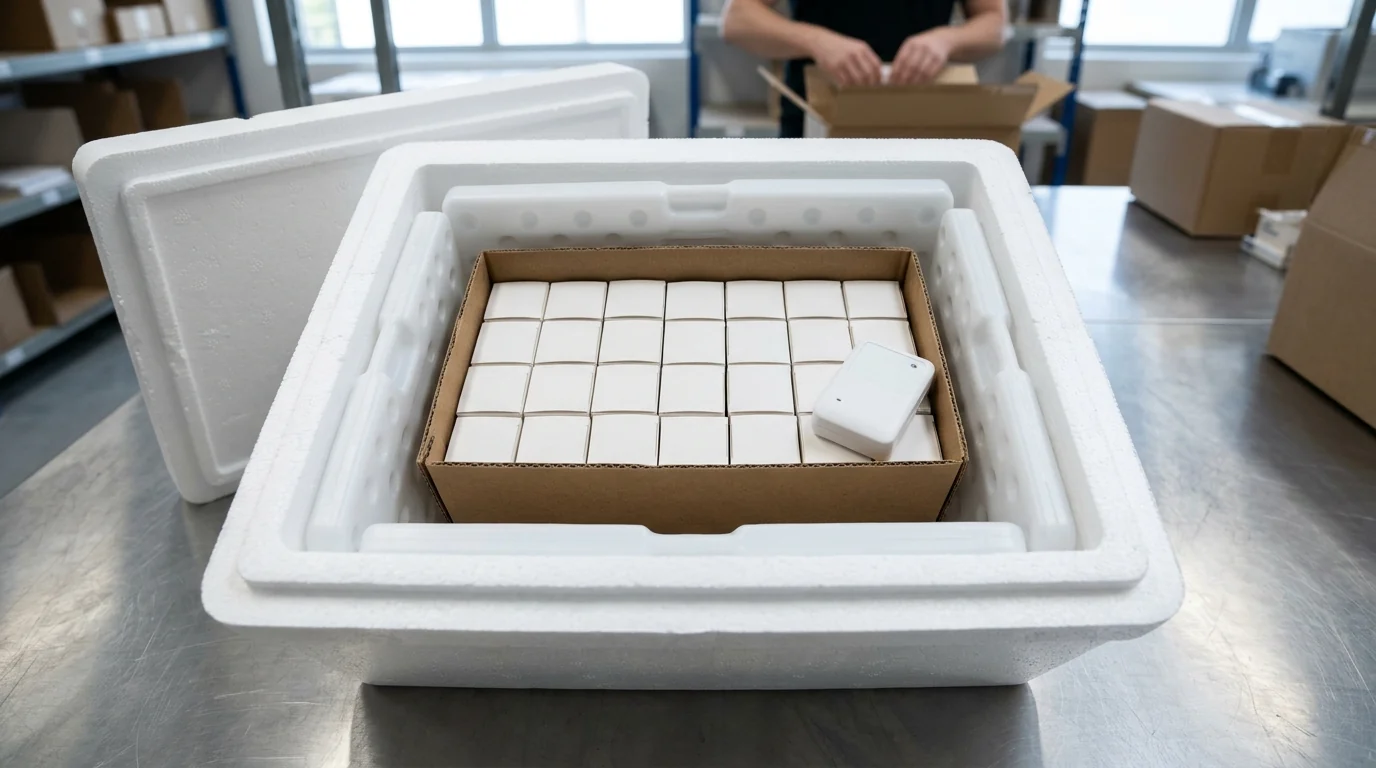
Under WHO Annex 9 clauses 6.8.3 and 6.9, container qualification of insulated passive containers should include full details of the packaging assembly, the thermal conditioning regime, the minimum and maximum shipping volume, weight and thermal mass that can safely be accommodated in the container, and the correct placement of temperature monitors where these are used, while shipping container packing should protect freeze-sensitive products against temperatures below 0 °C when frozen packs are used.
Coolant conditioning regimes and degree-hour route profiling
Under WHO Route Profiling Technical Supplement Glossary, a conditioned ice-pack is an ice-pack that has been allowed to warm at ambient temperature until some liquid water is present inside the pack and the ice core is able to move inside the pack when it is shaken, yielding an effective temperature of 0.0 °C; a cool water-pack is a water-pack cooled to a temperature of +5.0 °C before use; and in the separate cool-life test, the empty passive container is stabilized at +43.0 °C and loaded with cool water-packs stabilized at +5.0 °C for a minimum of 24 hours, with cool life measured from when the container is closed until the temperature of the warmest point inside the storage compartment first reaches +20.0 °C at a constant ambient temperature of +43.0 °C.
Under WHO Route Profiling Technical Supplement Glossary, an ice-pack is a water-pack that has been frozen to a temperature between −5.0 °C and −25.0 °C before use.
Under WHO Route Profiling Technical Supplement Glossary, a warm-life test stabilizes the empty passive container at +18.0 °C and loads it with warm water-packs that have been stabilized at the same temperature for a minimum of 24 hours, measuring warm life from when the container is closed until the temperature of the coldest point inside the storage compartment first reaches 0.0 °C at a constant ambient temperature of −20.0 °C, while warm water-packs (typically stabilized at room temperature, up to a recommended maximum of +24.0 °C) are used for the transport of freeze-sensitive vaccines when the ambient temperature is below 0.0 °C.
Under WHO Shipping Container Technical Supplement Glossary, advanced phase change materials (PCMs) are temperature stabilizing media (typically comprising oils, salts, or paraffin) chemically engineered so that their latent heat of fusion occurs at a temperature other than 0 °C when phasing from liquid to solid at a pre-formulated temperature, whereas a fully charged and undamaged cryogenic dry/vapour shipper containing nitrogen can maintain −196 °C for up to 10 days, depending on the unit size.
Under WHO Route Profiling Technical Supplement degree-hour route profiling (Method B), the threshold temperature must not exceed +20.0 °C (a lower temperature, say +15.0 °C, may be chosen if required) for cool water-packs, is normally +8.0 °C for frozen and conditioned ice-packs, and is normally 0.0 °C for warm water-packs, as illustrated by a Dometic RCW25 model with a laboratory-tested cool life of 34.4 hours on a journey that lasted nearly 67 hours.
Under WHO Route Profiling Technical Supplement Annex 1, empirical degree-hour route evaluation (such as vaccine carrier type A with a rated cool life of 12 hours at +43 °C, expressed as a cool life “budget” of 12 × 43 = 516 degree-hours) is not suitable where the ambient temperature profile fluctuates more or less equally above and below 0.0 °C and where conditioned ice-packs or cool water-packs are used to transport freeze-sensitive TTSPPs, because there is a risk that the product may freeze; such routes should be validated using test shipments where both ambient and load temperatures are monitored.
Operational and performance qualification matrices
Under WHO Shipping Container Technical Supplement section 2.1, it is strongly recommended that both minimum and maximum product loads are tested at each stage (since in most cases the lowest thermal mass products are the ones most susceptible to temperature change); under section 2.1.1 (Design qualification), at a minimum four packaging configurations should be tested unless otherwise specified (one heat profile maximum product load, one heat profile minimum product load, one cold profile maximum product load, and one cold profile minimum product load, though products that can safely be shipped frozen do not need cold profile testing); and under section 2.1.2 (Operational qualification), to demonstrate repeatable performance the OQ tests must be carried out in triplicate and must successfully meet the acceptance criteria in every one of these tests.
Under WHO Shipping Container Technical Supplement section 2.2.1, DQ and OQ testing uses thermal test chambers within a tolerance of ±3 °C, a weighing scale with an accuracy of ±5% of the gross container weight, and a multi-channel temperature data logger with thermocouples having an acceptable operating tolerance of ±0.5 °C for temperatures > −18 °C and ±0.8 °C for temperatures ≤ −18 °C, or a portable EDLM with an acceptable operating tolerance of ±0.5 °C over a temperature range approximately between −20 °C and +50 °C (with wider tolerances acceptable for thermistor EDLMs at temperatures outside this range, such as ±0.8 °C for temperatures ≤ −18 °C or ±2 °C for temperatures below −40 °C in dry ice shipments).
Under WHO Shipping Container Technical Supplement section 2.4 and Table 1, at least three tests per shipping container are required for both the minimum and maximum product payload, and at a minimum each series of tests should be conducted during the warmest and coolest part of the year; Table 1 gives an example of a test schedule with one container type, two packaging configurations, and two temperature profiles, requiring a minimum of 12 tests to be performed.
Under WHO Shipping Container Technical Supplement PQ test procedures (steps d–g), before conducting each test the payload is conditioned at its standard storage temperature for the minimum time needed to achieve a uniform temperature throughout the payload (e.g., +2 °C to +8 °C for 24 hours) in conditioning equipment that should be able to maintain the temperature set point within ±3 °C, using NIST-traceable calibrated portable EDLMs whose resolution should be 0.1 °C or better, whose accuracy should be ±0.5 °C over a temperature range approximately between −20 °C and +50 °C, and whose maximum temperature-recording interval is no greater than 30 minutes (5 or 10 minutes is better), with the logger’s sensor response time less than the chosen recording interval.
Under WHO Shipping Container Technical Supplement PQ sensor placement rules (steps i–j), each test uses a minimum of one interior payload EDLM and one external ambient EDLM, with interior EDLMs placed in direct contact with the payload whenever possible; if a single logger is used it should be located in the spot most susceptible to failure (in many cases likely to be a top corner of the payload, or determined by consulting the OQ report if OQ test data are available).
Standardized profiles, thermal simulation, and distribution rules
Within the packaging industry, International Safe Transit Association’s Standard 20 and Test Standard 7E provide a widely recognized framework for designing and qualifying insulated shipping containers: Standard 20 defines the qualification process, while ISTA 7D and 7E are both highly used profiles (7D is tougher with higher highs and lower lows and is not a realistic real-world profile but is often used to prove performance of intercontinental shipments, whereas 7E is more like a real-world profile for North America), and ISTA distinguishes its Standard 20 and 7E methodology from “Customized shipping lane data” or “customized worst case shipping qualification”; the original ISTA parcel study collected data during 2008 and 2009 from 82 different lanes.
According to the ISTA Pharma Committee thermal modeling whitepaper, thermal modeling is the creation of a 3D computer-generated model of a shipping system that can be used to assess performance capability under varying design parameters (with major subsystems represented in space considering dimensions including outer shell, insulation assembly, pack-out configuration, payload, and dunnage, tuned to align with chamber test data), whereas thermal simulation refers to the process used to generate different outcomes in terms of time and temperature by changing product load, ambient profiles (ATP), and shipment durations, and the variety of tools available for assessing packaging ranges from simple calculators and self-developed equations in software like Microsoft Excel to advanced multiphysics finite element analysis (FEA) and computational fluid dynamics (CFD).
Under EU GMP Section 6 (Verification of Transportation, clauses 6.1–6.4), finished medicinal products, investigational medicinal products, bulk product, and samples should be transported from manufacturing sites in accordance with the conditions defined in the marketing authorisation, the approved label, product specification file, or as justified by the manufacturer (6.1); transportation routes should be clearly defined and seasonal and other variations should also be considered (6.2); a risk assessment should be performed to consider variables such as delays during transportation, failure of monitoring devices, topping up liquid nitrogen, and product susceptibility (6.3); and continuous monitoring and recording of any critical environmental conditions to which the product may be subjected should be performed, unless otherwise justified (6.4).
Under EU GDP Guidelines on Transportation, equipment used for temperature monitoring during transport within vehicles and/or containers should be maintained and calibrated at regular intervals at least once a year; if cool-packs are used in insulated boxes, they need to be located such that the product does not come in direct contact with the cool-pack; staff must be trained on the procedures for assembly of the insulated boxes (seasonal configurations) and on the reuse of cool-packs; and there should be a system in place to control the reuse of cool-packs and adequate physical segregation between frozen and chilled ice packs.
Under US 21 CFR 211.142 and 211.150 (Subpart H), written warehousing and distribution procedures shall be established and followed, including quarantine of drug products before release by the quality control unit, storage of drug products under appropriate conditions of temperature, humidity, and light so that the identity, strength, quality, and purity of the drug products are not affected, a procedure whereby the oldest approved stock of a drug product is distributed first, and a system by which the distribution of each lot of drug product can be readily determined to facilitate its recall if necessary.
Under US 21 CFR wholesale storage rules, all prescription drugs shall be stored at appropriate temperatures and under appropriate conditions in accordance with requirements in the labeling or in the current edition of an official compendium such as the United States Pharmacopeia/National Formulary (USP/NF); appropriate manual, electromechanical, or electronic temperature and humidity recording equipment, devices, and/or logs shall be utilized to document proper storage; and inventories and records shall be made available for inspection and photocopying by authorized Federal, State, or local law enforcement agency officials for a period of 3 years after the date of their creation, with records kept at the inspection site or immediately retrievable by computer or other electronic means readily available for authorized inspection during the retention period and records kept at a central location apart from the inspection site and not electronically retrievable made available within 2 working days of a request by an authorized official of a Federal, State, or local law enforcement agency.
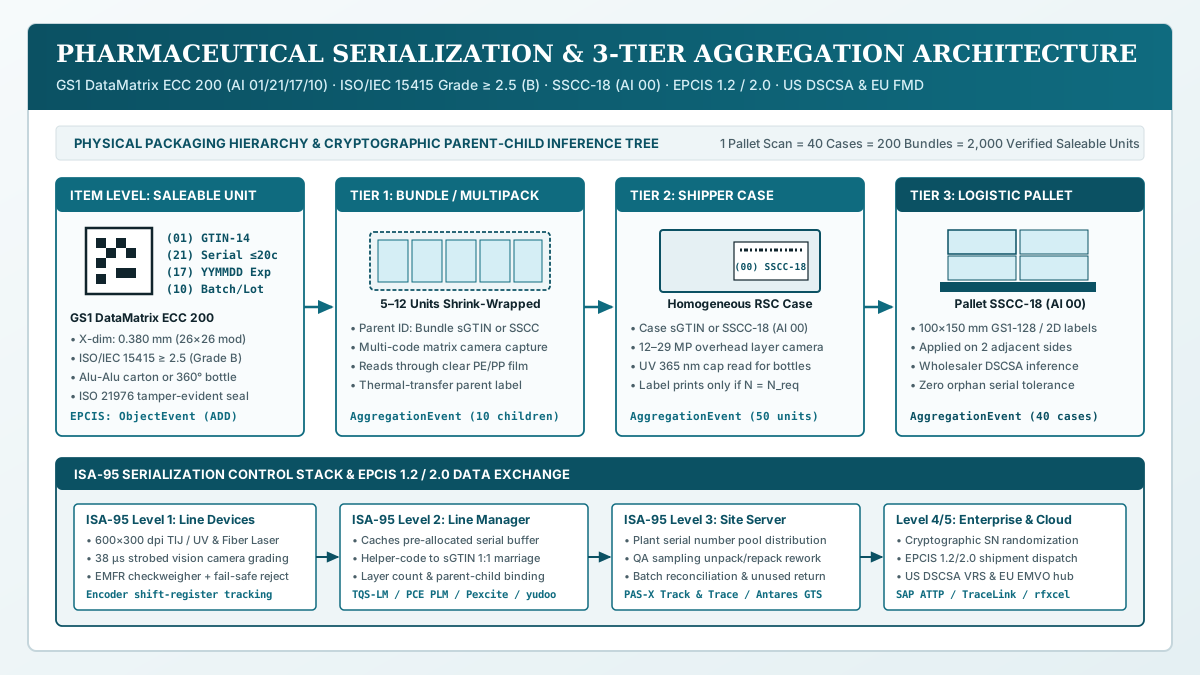
When linking lot-level temperature logs to case and pallet identifiers for quarantine or recall investigations, align your data hierarchy with our pharmaceutical serialization and aggregation guide.
Prepare the cold chain tracking and monitoring validation review
Use the following questions to organize your cold chain tracking and monitoring and cold chain packaging validation review:
- Which monitoring instrument family fits the lane: chemical threshold or progressive strips, primary-vial monitors, electronic freeze indicators, USB data loggers, or remote event loggers?
- Where are control sensors, air monitoring probes, and glycol buffer vials positioned relative to door openings, return air streams, and mapped hot or cold spots?
- How are conditioned ice packs, cool water packs, warm water packs, or phase-change materials segregated and separated from freeze-sensitive medicine cartons?
- Which Mean Kinetic Temperature calculation window, logging interval, and excursion disposition rules apply to the product storage regime?
- How do chamber tests and field shipments cover light and heavy thermal mass payloads across summer and winter ambient profiles?
Carry your confirmed parameters into the packaging equipment requirements checklist and explore related distribution guides in pharmaceutical supply chain.
Sources
- World Health Organization — Performance Quality Safety Temperature Monitoring Devices Overview and Catalogue
- World Health Organization — Performance Quality Safety Specification for Vaccine Vial Monitors and Prequalified Freeze Indicator Data Sheets
- World Health Organization — Technical Report Series Model Guidance for the Storage and Transport of Time- and Temperature-Sensitive Pharmaceutical Products
- World Health Organization — Technical Supplements on Transport Monitoring, Temperature Mapping of Storage Areas, Qualification of Shipping Containers, Transport Route Profiling, and Qualification of Temperature-Controlled Storage Areas
- National Institutes of Health PubMed Central — Mean Kinetic Temperature Evaluations Through Simulated Temperature Excursions and Risk Assessment
- European Commission — EudraLex Good Manufacturing Practice Qualification and Validation Annex
- European Commission — Guidelines on Good Distribution Practice of Medicinal Products for Human Use
- U.S. Government Publishing Office and Food and Drug Administration — Code of Federal Regulations Current Good Manufacturing Practice for Finished Pharmaceuticals and Wholesale Prescription Drug Distributor Storage Requirements
- Tive — Mean Kinetic Temperature in Pharmaceuticals Guide
- ThermoSafe and International Safe Transit Association Pharma Committee — Cold Chain Packaging Profiles and Thermal Modeling Whitepaper