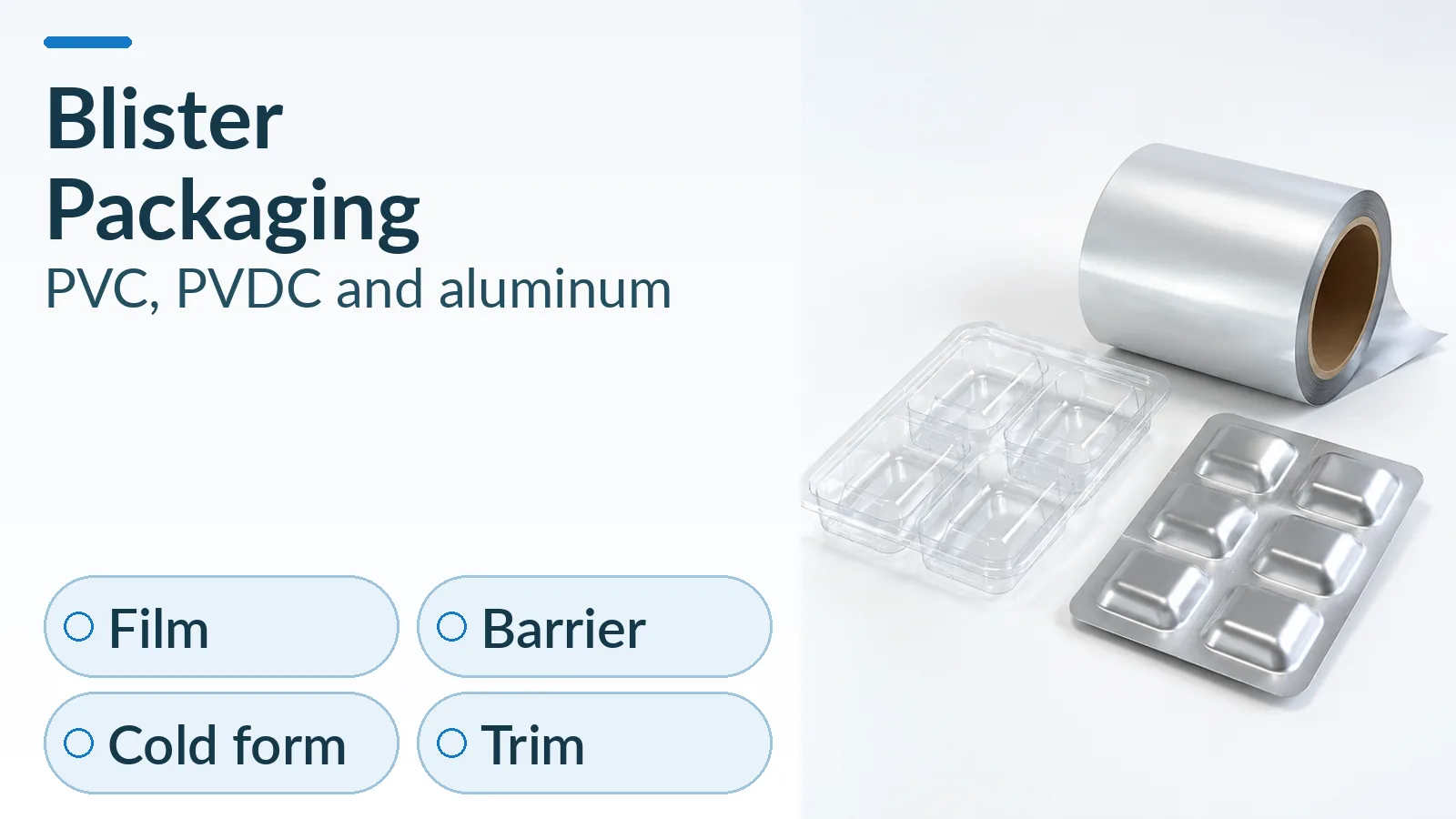
A capsule vs tablet change on a packaging line can turn a repeatable feed into jams, damaged doses or incorrectly filled pockets. The main requirements change with the finished product’s geometry and handling behavior: reassess feeding and pocket filling, then match blister-forming tooling to the selected material and cavity.
Capsule vs tablet packaging-line requirements depend on the actual product, not a universal division into two machine types. Finished capsules may need different orientation guides and cavities from tablets; either form can require a different feeder when its shape or damage tolerance changes. The forming method follows the packaging material, while inspection must distinguish an acceptable pocket from a missing, misplaced or extra dose. This guide covers those transfer and tooling decisions, with a dimensional screening example, rather than comparing clinical performance or repeating the requirements for an entire packaging line.

Quick specs: define the product at the packaging inlet
Use actual dose dimensions and observed handling behavior; the words “capsule” and “tablet” do not supply a speed, clearance or damage limit.
| Input or item | Typical value or source | Why it matters |
|---|---|---|
| Finished-dose envelope | Product drawing and incoming length, width/diameter and thickness measurements | Sets the guide and cavity geometry to assess |
| Feed behavior | Product trial; Uhlmann describes brush, vibratory and other feeders for different geometries | A feeder category can cover both tablets and capsules |
| Packaging filling | Uhlmann describes placement into formed pockets | This operation loads completed doses; it does not manufacture or fill capsule shells |
| Forming route | Uhlmann describes thermoforming and cold forming | Material and tooling establish the route, not the dose-form label |
| Pocket occupancy | Product-specific requirement; Uhlmann’s brush-feeder guidance addresses double filling | A pocket that admits the dose can still admit an unwanted extra dose |
| Clearance example below | Assumed minimum opening 8.8 mm; assumed maximum product width 8.0 mm; assumed per-side clearance 0.5 mm | Illustrative inputs only, not an OEM setting or universal tolerance |
Feeding: compare handling behavior before changing equipment
Choose guides and a feeding approach from the product’s shape and observed damage risk, then verify the transfer into the intended pocket.
Uhlmann’s feeder overview includes both tablets and capsules within its feeding options. Its product descriptions support a shared equipment category, while leaving the product-specific configuration to be established.
The following table identifies conditional engineering risks to challenge during a changeover. It does not assume every capsule is fragile or every tablet sheds dust.
| Handling question | Capsule requirement to check | Tablet requirement to check | Dominant Failure Mode & Prevention |
|---|---|---|---|
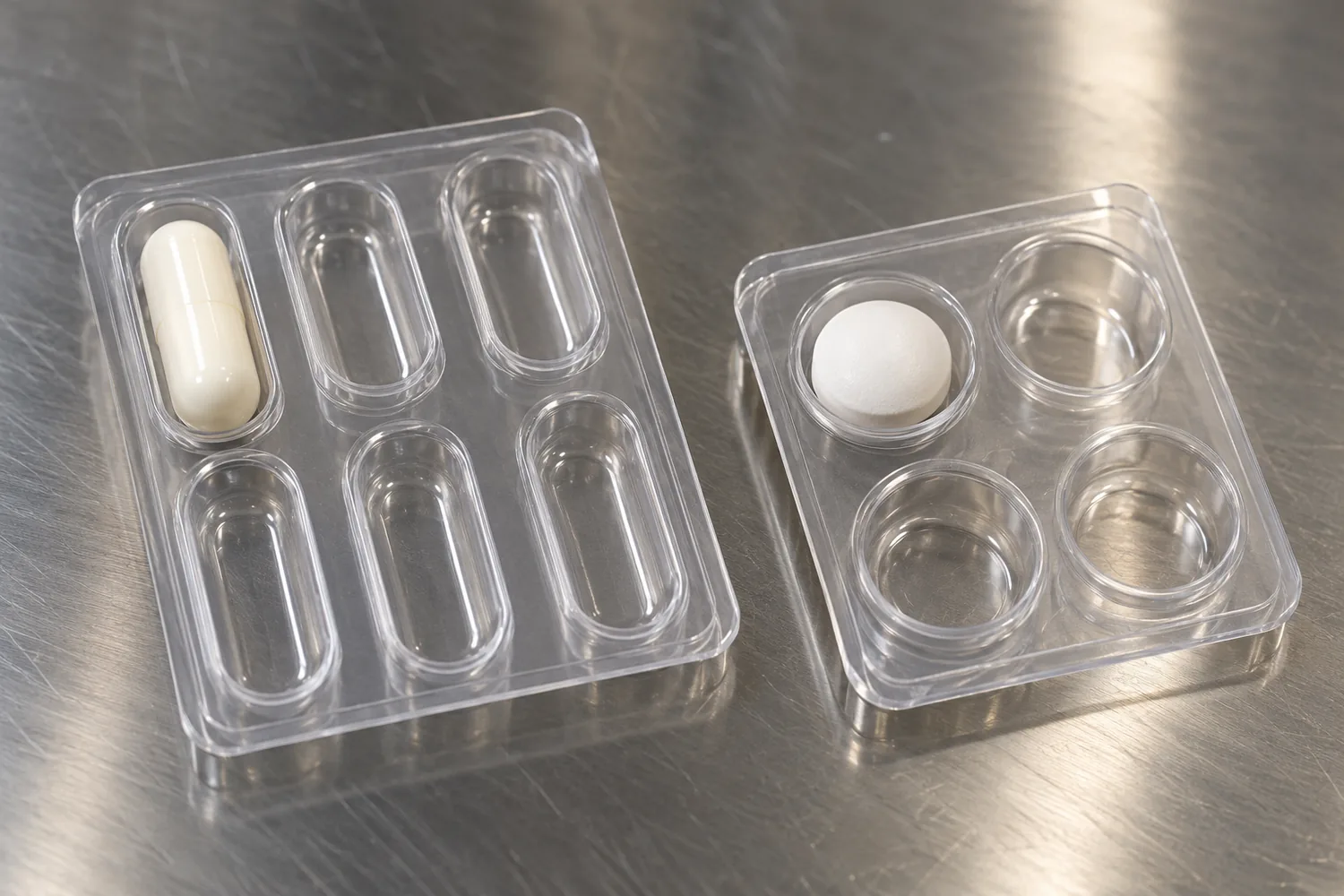
| Orientation through the guide | Check the assembled capsule’s full envelope and its alignment with an oblong pocket | Check the actual round, oblong, convex or irregular profile | Bridging or rotation at transfer: use guides matched to the incoming dimensional range and observe placement |
| Contact and agitation | Inspect the shell and joint after the proposed handling path | Inspect edges, coating and surfaces after the same path | Damaged doses or accumulating debris: adjust contact and agitation, manage debris and repeat the trial |
| Entry into the cavity | Check that the complete capsule sits below the sealing plane | Check seating across thickness and shape variation | A protruding dose reaches the seal area: revise cavity fit or placement and challenge inspection |
| Occupancy | Challenge empty, misplaced and extra-dose conditions | Challenge the corresponding conditions with the tablet product | Incorrect pocket accepted: verify detection and the physical reject path using defined challenge samples |
These checks follow the product’s observed behavior. Record the point where damage first appears, rather than attributing all breakage to the filling station. Separate acceptable-product recovery from removal of dust and fragments.

Filling: place completed doses and verify occupancy
Blister filling places completed capsules or tablets into formed pockets; capsule-shell filling belongs upstream of this packaging comparison.
Uhlmann’s brush-box description describes a hopper, a vibrating chute that separates dust and breakage, and brushes and agitators that move doses into pockets. It also states that pocket design must prevent two products entering one pocket. Making a cavity wider to cure a jam therefore needs a second check for extra-dose occupancy.
Specify acceptable seating and the defect set before assessing inspection. Presence alone does not answer whether the dose is in the correct position. Challenge the chosen system with representative defects and confirm that a detected defect reaches the intended reject location. A camera specification alone leaves that transfer unverified.
Blister forming: distinguish material changes from dose changes
A capsule-to-tablet change may require a different cavity without requiring a different forming principle; changing the forming material can also change the feeding arrangement.
Uhlmann’s process description separates pocket forming, dose loading, lid sealing and punching. Reassess the pocket’s length, lateral clearance and depth for the new dose, and confirm that the chosen material can produce the intended geometry on the proposed tooling.
There is a specific compatibility limit in Uhlmann’s brush-feeder documentation: that feeder is intended for thermoforming film; for aluminum forming foil, Uhlmann recommends vibratory or other dedicated feeding arrangements. This is a named OEM’s configuration guidance, not a prohibition covering every brush feeder. It shows why a material change can reach beyond the forming station.
Do not infer product heat tolerance or moisture protection from “capsule” or “tablet.” Those inputs remain product-specific. ICH Q1A(R2), section 2.2.4, describes stability testing in the container-closure system proposed for marketing, including appropriate secondary packaging and labeling.
Use a physical threshold to screen pocket fit
Exclude a geometry that cannot provide its specified free clearance before spending time tuning the feeder.
Rules-of-Thumb: If lateral clearance margin g < 0 mm under maximum incoming dose width and minimum pocket opening → choose revised pocket or guide geometry, because the opening cannot accommodate the specified dose envelope plus the required free clearance in that orientation.
For a simplified, straight placement with equal clearance on both sides:
g = Wmin − (Dmax + 2c)
Here Wmin is minimum clear pocket opening, Dmax is maximum finished-dose width in the intended orientation, and c is specified free clearance per side; all use millimeters. The factor 2 counts the sides.
Worked example — every input is an assumption: Wmin = 8.8 mm, Dmax = 8.0 mm and c = 0.5 mm. Assume aligned straight placement and symmetric lateral clearance. Then g = 8.8 − (8.0 + 2 × 0.5) = −0.2 mm. The assumed opening is 0.2 mm below the assumed clearance requirement; revise the geometry before a placement trial.
The assumed 0.5 mm clearance is not an industry limit. A positive margin only passes this lateral screen: pocket taper, length, depth, product turning, dynamic motion and double filling still need assessment. Apply the calculation to the actual maximum width of an assembled capsule or the relevant tablet orientation.
Carry the change through its lifecycle and downstream handoff
Compare the losses introduced by the changeover as well as whether the feeder can load the product.
Record damaged doses, rejected filled blisters and unused start-up web separately. Track time spent cleaning product-contact parts, changing formats and restoring acceptable filling. Those records reveal recurring material and labor consumption without assuming a generic capsule-versus-tablet operating advantage.
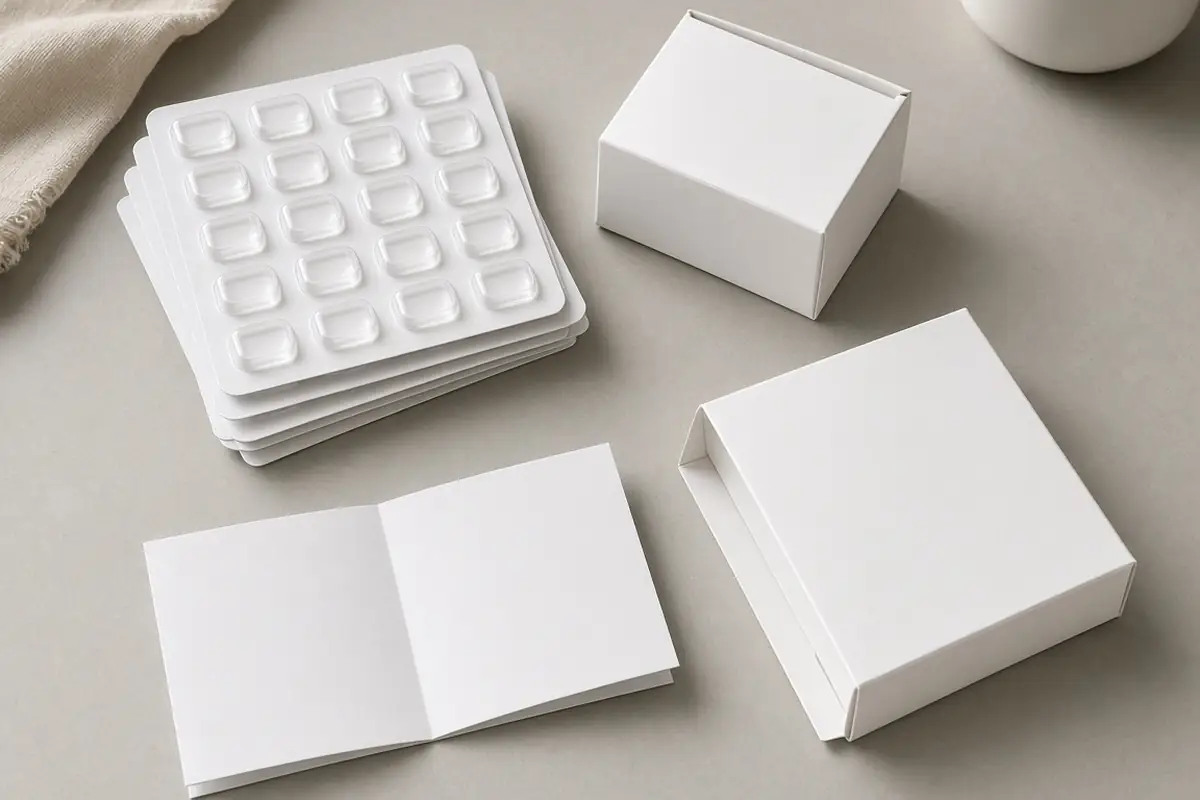
If a new cavity changes card dimensions or stacking behavior, carry that change into the carton-loading assessment. The pharmaceutical cartoning guide covers that downstream interface. Put the resulting product, pack, inspection and interface requirements into the packaging-line selection guide, within the wider pharmaceutical packaging section.
Method and sources
This guide uses linked original Uhlmann descriptions for feeder coverage, brush operation, film compatibility, occupancy design and the blister-process sequence. ICH Q1A(R2), section 2.2.4, supplies the final-pack stability context. The comparison’s failure checks and clearance screen are engineering deductions. All worked dimensions are assumptions, with no machine speed, model recommendation or universal damage threshold inferred.
Updated October 2026.