
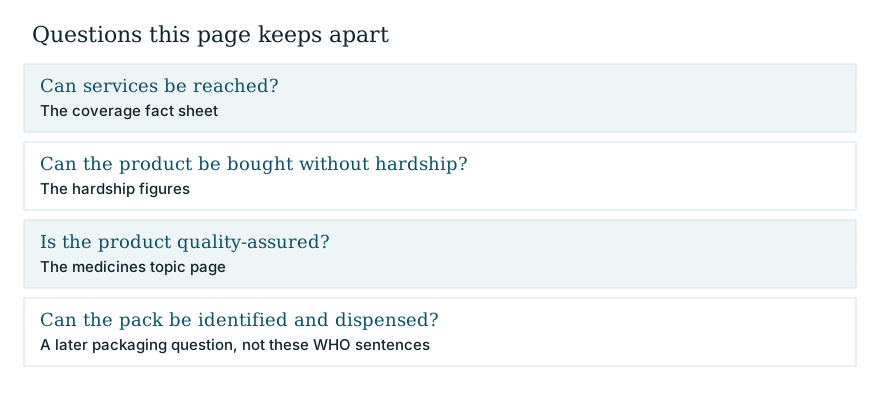
A low list price still fails the person who cannot reach a service, who is pushed into hardship by the payment, or who receives a product that is not quality-assured. Treating “access” as a single number hides which of those failures is actually happening.
On the WHO fact sheet read on 14 October 2026, universal health coverage means all people can use the full range of quality health services they need, when and where they need them, without financial hardship. Medicines sit inside that definition. They are not the whole of it.
The coverage figures on the fact sheet
The same fact sheet says the world is not on track for universal coverage at the current pace, despite earlier gains since 2000, and that progress slowed after 2015. It states that the service coverage index rose from 54 to 71 between 2000 and 2023, and that annual progress in 2015–2023 dropped to one-third of the pre-2015 rate. It says the share of people not covered by essential health services fell by about 20 percent between 2000 and 2023, and that about 4.6 billion people were not fully covered in 2023. It says 2.1 billion people faced financial hardship in 2022, including 1.6 billion living in poverty or pushed deeper into it by out-of-pocket health spending, equal to 26 percent of the population, down from 34 percent in 2000.
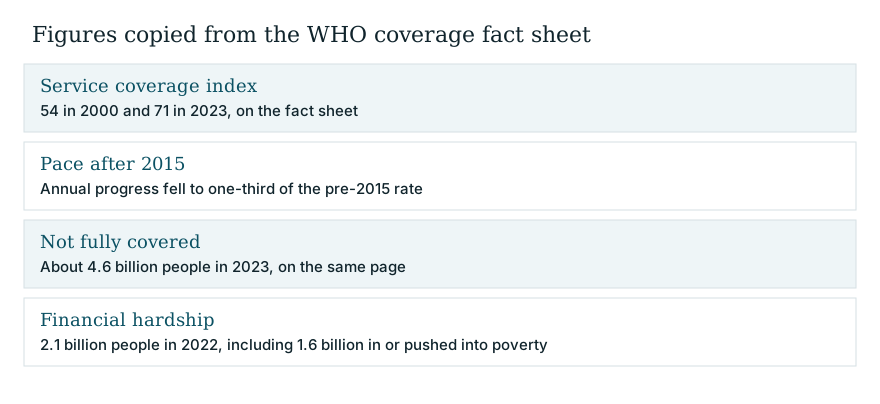
Those sentences are global descriptions from that fact sheet. They are not a result for one hospital, one brand or one packaging line.
What the medicines pages add
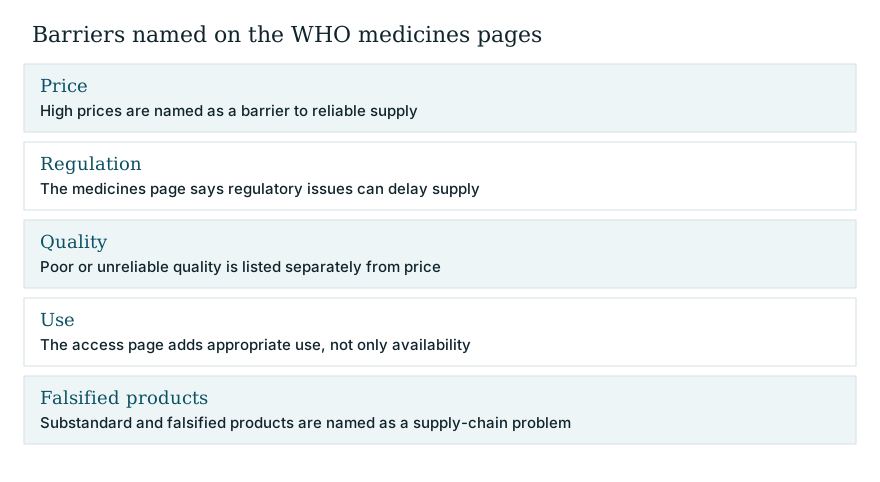
The WHO medicines topic page, read the same day, says quality-assured, safe and effective medicines, vaccines and medical devices are fundamental to a functioning health system. It says equal access and reliable supply are hampered by regulatory issues that can delay products, by high prices, by misuse, and by poor or unreliable quality. It also says the model list of essential medicines began with 208 medicines and has grown to 460 pharmaceuticals, and that countries use it as a guide for procurement even though it was not designed as a global standard.
The access-to-medicines page adds shortages of essential medicines, especially for noncommunicable diseases, and substandard and falsified products entering supply chains. It says availability is not the only problem: products also have to be used appropriately, and it names antimicrobial resistance linked to overuse.
Where packaging does not belong in this account
None of those three pages, as read on 14 October 2026, says that a carton, a blister or a leaflet is the main cause of the coverage gap. Packaging can still decide whether a dispensed unit is identifiable and intact. That question is on Packaging and medicine availability, and it is not a rewording of the WHO hardship figures.
Read Systems thinking in healthcare for the actor list, and stay on the health systems section for the shelf these two pages share.
How this page was put together
Numbers and definitions are quoted from the WHO pages named above, read on 14 October 2026. No national forecast was added. No price for a named medicine was added.